
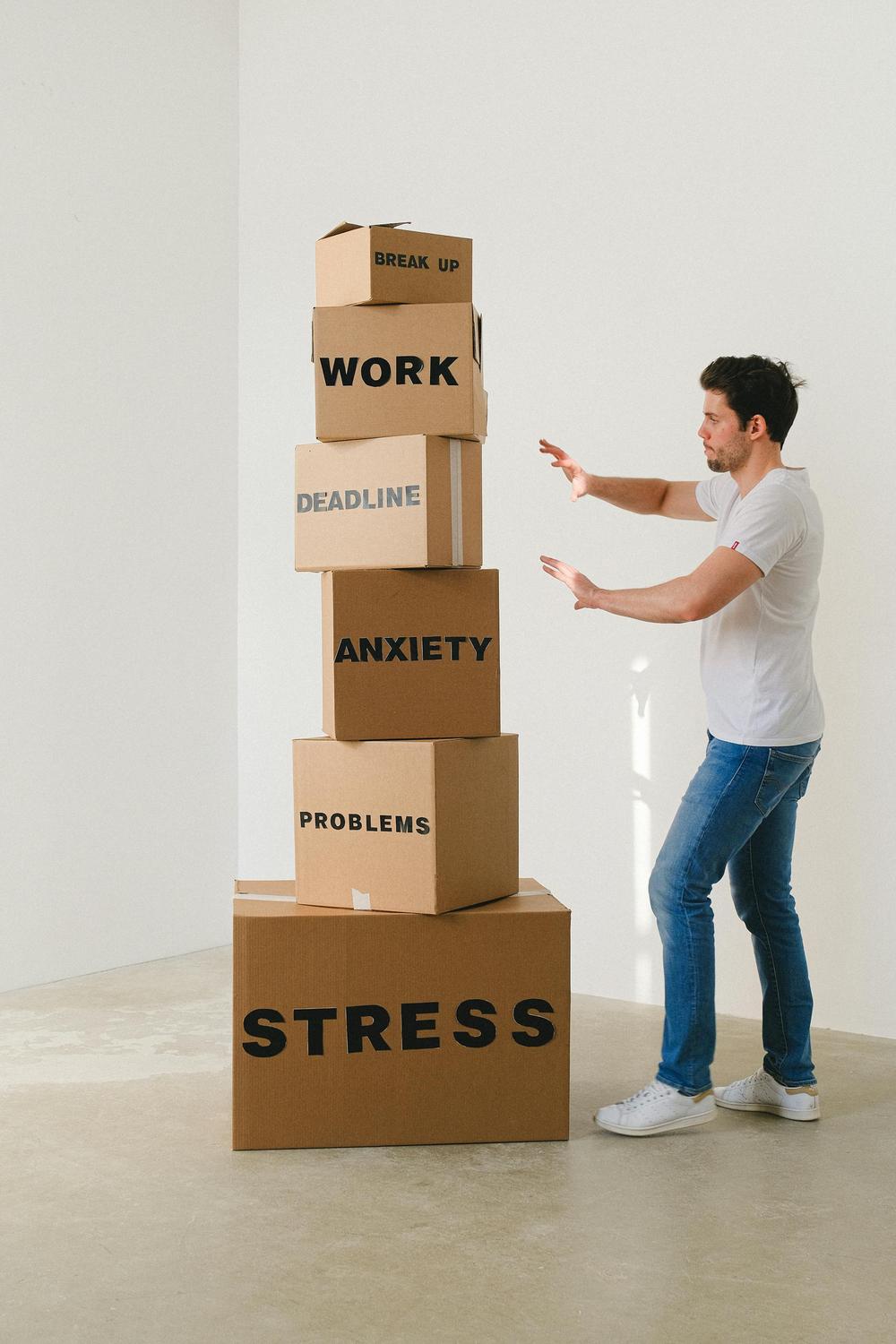
There is a particular kind of discomfort that settles in the moment you sit down to rest. The dishes are done, the inbox is paused, and yet something insidious surfaces – a creeping sense that you should be doing more, achieving more, producing more. This is not ambition. It is not drive. It is productivity shame, and it has become one of the most pervasive and least-examined psychological burdens of contemporary Australian life.
Despite its quiet nature, the consequences of productivity shame are neither quiet nor small. They ripple outward into physical health, professional performance, personal relationships, and – ultimately – the broader economic fabric of Australian society.
What Is Productivity Shame, and How Does It Differ From Healthy Ambition?
Productivity shame is defined as a persistent feeling of inadequacy and anxiety that emerges when an individual is not constantly engaged in productive activity. Its hallmark is guilt – the kind that surfaces during moments of rest, relaxation, or any time perceived as insufficiently “useful.”
What distinguishes productivity shame from healthy ambition is its motivational substrate. Healthy ambition is driven by intrinsic motivation: curiosity, purpose, and the satisfaction of growth. Productivity shame, by contrast, is driven by fear – specifically, the belief that one’s fundamental worth as a human being is contingent upon how much one achieves. When rest becomes psychologically unsafe, the result is not greater output, but compounding dysfunction.
Productivity shame operates within a broader ecosystem of related phenomena. Hustle culture – the pervasive ethos that frames busyness as virtue and rest as weakness – provides the cultural scaffolding. Toxic productivity describes the compulsive need to continue producing even to the point of physical or emotional exhaustion. Together, these three forces reinforce one another within modern workplace environments, creating conditions in which individuals measure their intrinsic worth almost exclusively by performance metrics.
Productivity shame is not a personal failing. It is a predictable psychological response to a system that has come to treat human beings as perpetual optimisation projects rather than biological entities with essential cyclical needs.
What Modern Pressures Are Fuelling Productivity Shame in Australia?
Australia is not immune to these forces – it is, by several measures, especially susceptible to them. The structural, cultural, and technological pressures converging on Australian workers in 2026 are extraordinary in both their scale and their subtlety.
Structural Workplace Pressures
Research data indicates that 49% of Australian workers cite inappropriate workload as the principal driver of burnout. Meanwhile, 59% of surveyed Australian employees have experienced work-related mental distress stemming from workload pressure, meeting overload, and unrealistic deadlines. The average employee now spends 3.31 hours per week on unnecessary tasks and meetings, while 32% report an inability to take proper breaks due to back-to-back scheduling.
Knowledge workers switch applications and activities every 20 seconds on average, rarely sustaining more than 20 minutes of uninterrupted focus on any single activity. The cumulative cognitive cost of this fragmentation is profound – and directly feeds productivity shame, as individuals sense their output diminishing without understanding why.
Economic and Housing Pressures
Australia’s housing affordability crisis functions as an accelerant. Workers extend hours and forgo rest in pursuit of mortgage deposits, driven by the very real economic precarity of a competitive property market. Australia ranks 32nd out of 41 OECD countries for work-life balance – a sobering statistic for a nation that ranks 8th globally in overall life-work balance metrics.
Digital Technology and Social Media
The architecture of modern digital tools is not neutral. Notifications, Slack pings, and always-on workplace applications have effectively dissolved the boundary between professional and personal time. Social media compounds this through curated representations of relentless achievement – what researchers have termed “productivity pornography” – that foster pervasive comparison and inadequacy. Streak-based applications gamify guilt, while fitness trackers shame sedentary hours. Every digital touchpoint becomes an implicit audit of whether one is doing enough.
Deep Cultural and Ideological Roots
At the ideological level, productivity shame draws from legacies of the Protestant work ethic, which historically framed idleness as a moral failing. Contemporary neoliberal capitalism has amplified this through performance dashboards, gig economies, and individualised output metrics that reduce complex human contribution to quantifiable data points. In Australia specifically, Anglo cultural norms place high value on Performance Orientation – rewarding competition and high achievement – whilst maintaining lower emphasis on collective wellbeing structures that might buffer individuals from shame-driven overwork.
Who Bears the Greatest Burden of Productivity Shame in Australia?
Productivity shame does not distribute itself equally. Research reveals striking disparities across age, gender, and occupational category.
| Population Group | Key Statistic | Primary Driver |
|---|---|---|
| All Australian workers | 61% experiencing burnout (vs. 48% global average) | Inappropriate workload, unrealistic deadlines |
| Workers aged 18–29 | Highest burnout rates nationally (54%+) | Workload, lack of management support, inflexible conditions |
| Generation Z | 85% experiencing burnout; 30% report productivity anxiety daily | Algorithm-driven performance demands, economic precarity |
| Women | 72% reporting burnout in past 12 months | Gender wage gap, disproportionate unpaid domestic labour |
| Small business owners | 89% reporting burnout at least sometimes (vs. 67% full-time employees) | Absence of formal mental health frameworks, financial risk |
| Healthcare workers | 43% report inability to take proper breaks | Workload pressure, emotionally demanding roles |
| Remote workers | 86% experiencing burnout; 61% find it harder to “unplug” | Blurred work-life boundaries, increased unpaid work time |
Women carry a particularly compounded burden. Beyond higher reported burnout rates, women perform an average of 4 hours and 53 minutes of unpaid domestic work daily compared to 3 hours and 52 minutes for men. Female parents with children under 15 average 7 hours and 29 minutes of unpaid work daily. This “dual burden” means that productivity shame infiltrates both the professional and domestic spheres simultaneously – a relentless double audit from which there is no natural reprieve.
What Are the Real Consequences of Productivity Shame on Individuals and the Economy?
The consequences of sustained productivity shame extend well beyond individual discomfort. They represent a significant public health and economic challenge.
Individual Impacts
Productivity shame is associated with chronic stress, burnout, imposter syndrome, anxiety, and diminished creativity. Critically, Stanford research demonstrates that productivity sharply declines beyond 50 hours of work weekly, with virtually no measurable increase in output beyond 55 hours. Yet productivity shame drives workers to persist beyond these thresholds, generating a cruel paradox: the more one strives to escape the shame, the less productive one actually becomes.
The cognitive consequences are equally significant. Preoccupation with unmet expectations diminishes concentration, impairs memory consolidation, reduces decision-making quality, and suppresses the creative thinking that underpins meaningful knowledge work. The planning fallacy – the well-documented tendency to underestimate how long tasks take – further entrenches shame. When planned weeks assume 50 hours of productive time but only 12.5 hours are genuinely available, shame is not merely a risk; it is an arithmetical inevitability.
Economic Impacts
The economic consequences are staggering. The Australian Productivity Commission estimates total costs of mental ill-health to the Australian economy at $200–220 billion per year. Burnout and stress-related absenteeism alone cost an estimated $14 billion annually. Mental health compensation claims have increased by 36.9% since 2017–18, with a median compensation payout of $58,615 per claim – nearly four times the $15,743 average for physical injuries. The median time lost per mental health claim is 34.2 working weeks, compared to 8.0 weeks for all injuries.
At the human level, 2.73 million Australians are likely to consider leaving their jobs in the next 12 months due to mental distress. Burnout drives 40% of employee resignations. The organisational and societal cost of talent attrition from shame-heavy workplace cultures is one of the most underacknowledged productivity risks in Australian business today.
What Does the Science of Rest and Recovery Reveal About Productivity Shame?
One of the most important – and most consistently misunderstood – insights from occupational health research is that rest is not the antithesis of productivity. It is its biological prerequisite.
The Effort-Recovery Model establishes that every work activity causes cumulative mental and physical exertion. Without adequate recovery, physiological and psychological systems remain in a state of chronic activation, dramatically increasing the risk of long-term health deterioration. Recovery is not earned – it is required.
Research demonstrates that even brief rest breaks are associated with meaningful improvements in performance: a 5% increase in quantitative output and an 8% increase in qualitative work outcomes. Micro-breaks of 5–10 minutes stabilise performance levels, whilst longer breaks of 10 or more minutes are particularly beneficial for cognitively demanding tasks.
The science identifies four core recovery experiences that restore depleted cognitive and emotional resources:
Psychological Detachment
The cognitive and emotional disengagement from work-related thinking. This is arguably the most critical recovery mechanism and the one most thoroughly undermined by always-on digital culture.
Relaxation
A state of calm and tranquillity, identified in research as the single most powerful predictor of wellbeing restoration. Relaxation is not laziness. It is a physiological necessity.
Mastery
The pursuit of challenging non-work activities that foster a sense of learning, growth, and accomplishment – providing psychological resources that transfer positively into professional performance.
Control
The exertion of genuine autonomy over leisure time and personal decisions, which restores the sense of agency frequently eroded by high-demand work environments.
Productivity shame operates by pathologising precisely the experiences – rest, relaxation, detachment – that neuroscience and occupational health research identify as non-negotiable foundations for sustainable performance.
How Can Organisations and Individuals Begin to Shift the Productivity Shame Narrative?
Understanding that productivity shame is a systemic phenomenon – not an individual character flaw – is the critical first reframe. The research is unambiguous: organisational culture, workload design, and leadership behaviour are the primary determinants of whether shame flourishes or diminishes.
Workplaces with mental health training have reported productivity losses cut by half (21% versus 38%) and a 10-point reduction in employees’ fear of judgment. Australia’s Right to Disconnect legislation has demonstrated concrete benefits: 58% of employers reported increased engagement and productivity following its implementation, with 77% of public sector organisations reporting productivity gains.
At the individual level, the research points toward reclaiming rest as a non-negotiable component of a sustainable working life – not something to be earned through exhaustion, but a structured and intentional practice embedded in daily rhythms. The shift from “productivity equals worth” to “sustainable contribution plus wellbeing equals thriving” represents not a retreat from ambition, but its most mature and evidence-informed expression.
The Path Forward: Redefining What It Means to Thrive
Productivity shame thrives in silence. It is sustained by a cultural narrative that equates busyness with importance, rest with laziness, and worth with measurable output. The research reviewed here – spanning occupational psychology, public health epidemiology, and economic analysis – converges on a single, compelling conclusion: this narrative is not only psychologically damaging, it is economically destructive and physiologically untenable.
For Australian workers, organisations, and policymakers, the imperative is clear. Sustainable thriving demands a recalibration of what we value, how we measure contribution, and how we design the environments in which people spend the majority of their waking lives. Addressing productivity shame is not a wellness trend. It is a structural and moral priority – one with documented consequences for every layer of Australian society.
Looking to discuss your health options? Speak to us and see if you’re eligible today.
What is productivity shame and why is it so common in Australia?
Productivity shame is a persistent psychological state in which individuals experience guilt, anxiety, or feelings of inadequacy when not actively engaged in productive activity. In Australia, factors such as high performance orientation norms, housing affordability pressures driving extended work hours, and digital technologies that blur the boundary between work and rest contribute to its prevalence. Research indicates that 61% of Australian workers experience burnout, highlighting the intensity of these pressures.
How is productivity shame different from burnout?
While closely related, productivity shame and burnout are distinct. Productivity shame is characterized by guilt and a sense of inadequacy when not producing, whereas burnout is a syndrome of chronic workplace stress marked by exhaustion, detachment, and reduced professional efficacy. Often, productivity shame can drive behaviors that lead to burnout by pushing individuals to ignore early warning signs of exhaustion.
What are the economic costs of productivity shame and burnout in Australia?
The economic consequences are substantial. The Australian Productivity Commission estimates the total cost of mental ill-health at $200–220 billion per year, with burnout and stress-related absenteeism alone costing around $14 billion annually. Additionally, mental health compensation claims are significantly higher compared to those for physical injuries, and millions of Australians face job attrition due to mental distress linked to these conditions.
Which groups are most affected by productivity shame in Australia?
Research shows that Generation Z workers, women, small business owners, and remote workers are disproportionately affected by productivity shame. For instance, Generation Z experiences burnout at rates as high as 85%, while women not only report higher burnout rates but also shoulder a greater burden of unpaid domestic work, compounding the effects of productivity shame.
Can rest and recovery genuinely improve productivity?
Yes. Scientific research confirms that structured rest and recovery significantly enhance productivity. Breaks, even as short as 5–10 minutes, can boost both quantitative and qualitative work outcomes. The Effort-Recovery Model and occupational health studies demonstrate that rest is a biological necessity, helping to restore cognitive and emotional resources, thus enabling sustainable high performance.