
Why Modern Australian Families Are Turning to Intentional Gratitude Practices
In the rhythm of contemporary Australian family life – school drop-offs, work commitments, digital distractions, and the relentless pace of modern schedules – it has become disturbingly easy for families to coexist without truly connecting. Research published in the ABS National Health Survey (2022) identifies mental and behavioural conditions as the most prevalent chronic condition in Australia, affecting 26.1% of the population. Against this backdrop, the concept of a gratitude board – a deliberately curated family appreciation space – is emerging as a low-cost, high-impact strategy grounded in evidence-based psychology. Far from being a decorative gesture, a gratitude board represents a structured, intentional practice with measurable implications for emotional resilience, relational health, and holistic family wellbeing.
What Is a Gratitude Board and How Does It Function as a Family Appreciation Space?
A gratitude board is a designated, visible display – typically mounted in a high-traffic area of the home such as the kitchen, family room, or entryway – where family members regularly record and share expressions of appreciation. Materials are straightforward: a corkboard, magnetic board, poster board, or even a section of painted wall paired with sticky notes, index cards, and writing utensils. The accessibility of materials is deliberately kept low-barrier; a small basket or container attached to the board ensures that participation requires minimal effort.
What distinguishes a family appreciation space from other decorative home features is its purposeful structure. The gratitude board functions as both a reflective tool and a communication conduit – a shared artefact around which family members gather to acknowledge one another’s contributions, celebrate small victories, and consciously redirect attention from daily stressors toward abundance. Implementation specialists recommend establishing a clear header (“We Are Grateful For…” or “Our Gratitude Board”), agreeing on a contribution frequency as a family unit, and scheduling regular group reading sessions to close the loop between expression and reception (Girls on the Run, 2024–2025).
What Does the Scientific Evidence Say About Gratitude and Family Wellbeing?
The evidence supporting gratitude practices as a meaningful wellness strategy is both robust and growing. A landmark meta-analysis by Diniz et al. (2023), published in the Einstein Journal, examined 64 randomised clinical trials and concluded that individuals who engaged in gratitude interventions experienced measurably greater feelings of gratitude, improved mental health outcomes, reduced symptoms of anxiety and depression, and more consistently positive emotional states. The authors specifically noted that acts of gratitude function as a therapeutic complement that can increase positive feelings across the general population.
Perhaps more striking is longitudinal data from the Nurses’ Health Study (Harvard T.H. Chan School of Public Health, published in JAMA Psychiatry, July 2024). Tracking 49,275 women over four years, researchers found that participants in the highest gratitude-scoring cohort demonstrated a 9% lower mortality risk compared to those in the lowest third – a finding that remained statistically significant even after controlling for physical health status, economic circumstances, and other mental health variables. As lead researcher Dr Tyler VanderWeele noted, the significance of this finding lies not in its magnitude alone, but in its accessibility: gratitude is a practice available to virtually everyone, irrespective of socioeconomic status.
At the neurological level, gratitude practices activate the brain’s reward pathways, stimulating the release of dopamine and serotonin – neurotransmitters associated with pleasure, motivation, and mood regulation. Consistent engagement with gratitude, including family-based practices on a shared appreciation board, has been shown to progressively reshape neural pathways, making positive perception increasingly automatic over time. When experienced collectively, as a family, these neurochemical effects are amplified, building shared emotional rapport and deepening interpersonal trust (Envision Therapy DFW, 2024).
How Does a Family Gratitude Board Benefit Children and Adolescents Specifically?
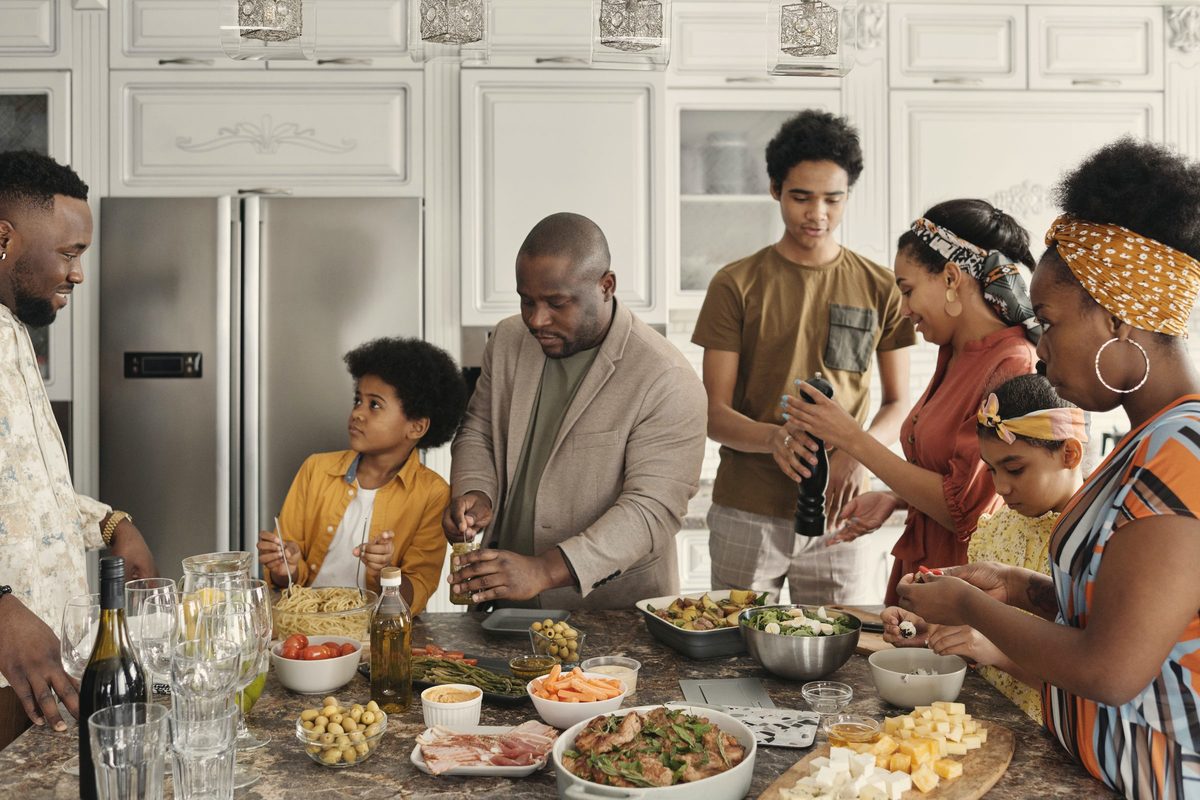
Children acquire social-emotional competencies primarily through observation and interaction within the family system. When a gratitude board is embedded in the home environment, children are consistently exposed to a modelled behaviour – expressing appreciation – that shapes their developing psychological frameworks in demonstrably positive ways.
Research published in Child Development (2025), examining 150 adolescents, found that greater life satisfaction and a stronger sense of purpose were both associated with dampened negative emotional reactivity to daily family conflict. In practical terms, adolescents who experience a more appreciation-rich family environment appear better equipped to navigate interpersonal friction without prolonged emotional distress. This finding has direct relevance to the role of a family appreciation space in fostering adolescent resilience.
For younger children, gratitude board participation reinforces a sense of being seen and valued – a psychological need that underpins self-worth development. Children who regularly practise gratitude within the family context demonstrate stronger friendships outside the home, greater generosity, and more consistent politeness. Meanwhile, a randomised controlled trial conducted in Hong Kong (2024) and published in Family Process involving 120 parents of young children found that a multicomponent intervention targeting positive psychological skills – including mindful awareness and positive reappraisal – significantly improved subjective and psychological wellbeing across multiple dimensions, underscoring the family-wide benefits of intentional positivity practices.
The following table summarises key research findings on gratitude interventions and family wellbeing outcomes:
| Study / Source | Population | Key Finding |
|---|---|---|
| Diniz et al. (2023), Einstein Journal | 64 RCTs (meta-analysis) | Gratitude interventions reduced anxiety/depression; improved positive emotional states |
| VanderWeele et al. (2024), JAMA Psychiatry | 49,275 women over 4 years | 9% lower mortality risk in highest gratitude cohort |
| Child Development (2025) | 150 adolescents | Higher wellbeing dampened negative reactivity to family conflict |
| Family Process RCT (2024) | 120 parents of young children | Positive psychological interventions improved subjective and psychological wellbeing |
| SAGE Journal (2024–2025) | 1,124 participants | Perceived family support strongly associated with positive daily affectivity |
How Should Australian Families Create and Sustain an Effective Gratitude Board?
A gratitude board is most effective when it is co-created rather than imposed. The following structured approach – adapted from evidence-based implementation guidance – offers a practical framework for Australian families:
Step 1: Establish Shared Intent
Introduce the concept as a family project, inviting input on frequency (daily, weekly, or flexible monthly contributions) and location. Shared ownership increases sustained engagement.
Step 2: Select an Accessible Location
Choose a space with consistent foot traffic – the kitchen or family room are ideal – ensuring the board remains visible and materials remain within easy reach for all age groups.
Step 3: Co-Design the Board
Decorating the board as a collective activity, incorporating each family member’s preferred colours and interests, transforms the object itself into a symbol of unity. Add a clear, warm header phrase.
Step 4: Adapt Participation by Age
For young children: Encourage drawing pictures of things they appreciate, or singing simple gratitude songs to share with the family.
For older children: Invite them to write lists of five things they are grateful for in five minutes – framed as a game rather than an obligation.
For teenagers: Offer the option of private written entries alongside the shared board, or a nightly practice of three reflective observations.
For adults: Include written notes of appreciation directed to specific family members, acknowledging particular actions or qualities observed that week.
Step 5: Schedule Group Reflection
Set a regular time – Sunday evenings, Friday dinners, or the first morning of each new month – to read entries aloud together. Celebrating contributions reinforces the practice as a valued family ritual.
Step 6: Archive and Revisit
Monthly, collect entries into a scrapbook, jar, or envelope. During challenging periods, revisiting these archived reflections serves as a tangible reminder of accumulated goodness – a particularly valuable resource for families navigating difficult seasons.
How Does a Family Appreciation Space Contribute to Holistic Wellbeing in an Australian Context?
Holistic family healthcare in Australia recognises the interdependence of physical, emotional, and social wellbeing. The Australian healthcare system – which invests $7,469 per capita annually in health, exceeding the OECD average of $5,967 USD PPP – increasingly supports family-centred care models that treat the patient and their family unit as an integrated team (OECD, 2024–2025). Within this framework, a family appreciation space is not a supplementary nicety but a functional tool that supports the relational infrastructure upon which individual health outcomes depend.
Research from the SAGE Journal (2024–2025), drawing on a sample of 1,124 participants, confirmed that perceived support from friends and family is specifically associated with greater positive affectivity – the everyday emotional baseline from which all other life experiences are processed. This affirms that the relational culture cultivated through a gratitude board has measurable influence on each family member’s day-to-day emotional state.
Furthermore, for Australian families in caregiving roles – a significant cohort given that an estimated 225,421 Australians serve as co-resident carers of adults with mental illness – gratitude practices have been identified as a protective factor against caregiver burnout. The ability to consciously orient attention toward moments of abundance, even within demanding caring environments, provides an emotional buffer that supports sustained engagement and reduces overwhelm (Mental Health Carers Australia, 2024–2025).
A family appreciation space, therefore, operates at multiple registers simultaneously: it strengthens communication, nurtures empathy, reinforces identity and belonging, supports stress regulation, and models the social-emotional values – kindness, humility, generosity – that children carry into their communities.
Building a Legacy of Appreciation Within the Australian Family Home
The gratitude board: family appreciation space is, at its core, a deceptively simple intervention with disproportionately meaningful consequences. In an era when Australian families face increasing complexity in their health, social, and professional lives, the deliberate creation of a shared space for acknowledgement and appreciation offers something that no algorithm, app, or productivity system can replicate: a living, evolving record of what a family values in one another.
The scientific literature is unambiguous. From reduced anxiety and improved emotional regulation to strengthened relational bonds and measurably enhanced resilience in children and adolescents, the evidence supporting family gratitude practices is both peer-reviewed and compelling. Establishing a gratitude board within the Australian home is not merely a wellness trend – it is an investment in the psychological architecture of the family system itself, with benefits that accumulate and compound across generations.
What is a family appreciation space and how is it different from a gratitude journal?
A family appreciation space—such as a gratitude board—is a *shared*, *visible*, and *interactive* practice that engages all members of a household simultaneously. Unlike a personal gratitude journal, which is typically private and individual, a gratitude board functions as a communal artefact that fosters collective acknowledgement, open communication, and relational connection within the family unit.
How does a gratitude board support the emotional wellbeing of children in Australian families?
Research consistently demonstrates that children who engage in regular gratitude practices within the family develop stronger social-emotional skills, greater generosity, more resilient friendships, and a more stable sense of self-worth. A gratitude board provides a structured, age-adaptable environment within which these skills are both modelled and reinforced through daily interaction.
How often should a family update their gratitude board to see meaningful benefits?
Evidence from implementation research suggests that consistency matters more than frequency. Whether contributions occur daily, weekly, or monthly, the critical factor is establishing a *reliable routine*—including scheduled group reflection sessions—that signals to all family members that the practice is valued. Monthly archiving of entries is also recommended to preserve accumulated reflections for future reference during challenging times.
Can a family gratitude board help with stress and conflict within the household?
Research supports the role of gratitude practices in shifting family attention from sources of stress or blame toward appreciation and abundance. This cognitive reorientation has been associated with reduced interpersonal tension, more constructive conflict resolution, and a greater sense of relational safety within the household environment.
Are there professional resources in Australia that support family wellbeing practices like gratitude boards?
Yes. Australia offers a range of family wellbeing support services, including the Federal Government’s Family Mental Health Support Services (FMHSS), the NSW Family and Carer Mental Health Program, Carer Gateway, Headspace, Beyond Blue (1300 22 46 36), and Lifeline (13 11 14). These services complement home-based wellbeing practices and do not require a formal diagnosis to access.