
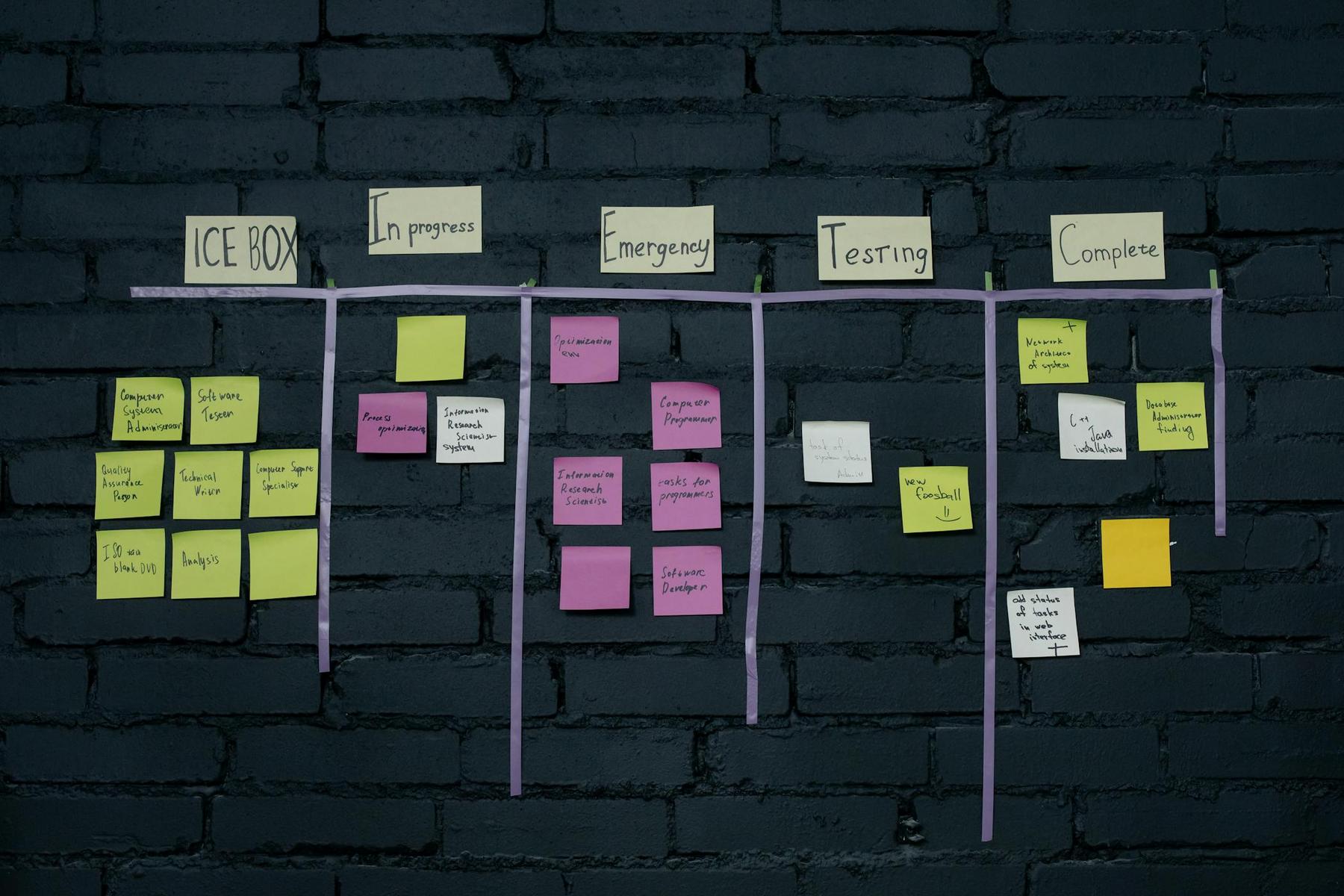
In an era where organisational agility determines competitive advantage, traditional project management approaches increasingly fail to meet the demands of complex, rapidly evolving environments. Teams struggle with rigid planning structures that cannot accommodate change, communication breakdowns that create costly delays, and hierarchical decision-making processes that stifle innovation. The result? Projects that overrun budgets by 65%, miss deadlines by months, and deliver outcomes misaligned with stakeholder needs. For healthcare consultancies and knowledge-intensive organisations operating in 2026, these failures are not merely inconvenient—they represent missed opportunities to serve clients effectively and adapt to regulatory, technological, and market shifts that demand swift, coordinated responses.
The Scrum Method emerges as a proven antidote to these productivity challenges. This lightweight, empirical framework within the broader Agile philosophy enables teams to organise and manage complex projects through structured, time-boxed iterations called sprints. Unlike waterfall approaches that front-load planning and delay adaptation, Scrum emphasises transparency, inspection, and continuous improvement—allowing teams to deliver value incrementally whilst responding to feedback and changing requirements. With 86% of software development teams utilising Agile practices and Scrum serving as the primary framework for 87% of organisations globally, this methodology has transcended its software origins to revolutionise operations across healthcare, consulting, research, and business transformation initiatives.
What Is the Scrum Method and Why Does It Define Modern Agile Productivity?
The Scrum Method is a structured framework for implementing Agile productivity principles through clearly defined roles, events, and artefacts. At its foundation lies a deliberate simplicity: the 3:5:3 rule prescribes three roles (Product Owner, Scrum Master, Development Team), five ceremonies or events (Sprint, Sprint Planning, Daily Scrum, Sprint Review, Sprint Retrospective), and three artefacts (Product Backlog, Sprint Backlog, Increment). This architecture creates a container for empirical process control—the philosophy that knowledge comes from experience and observation rather than theoretical planning.
The empirical nature of the Scrum Method distinguishes it from prescriptive project management approaches. Rather than attempting to predict and plan every detail upfront, Scrum acknowledges the inherent complexity and uncertainty in knowledge work. Teams operate in short cycles—typically two to four weeks—during which they transform a subset of prioritised requirements into working, potentially shippable increments. Each cycle provides concrete data about team capacity, estimation accuracy, and product direction, enabling progressively refined planning and execution.
The framework’s popularity stems from demonstrable outcomes. Agile projects achieve a 75.4% success rate with only a 9% failure rate, compared to 29% for traditional waterfall approaches. Teams adopting Scrum comprehensively report 250% better quality than those eschewing estimation practices, whilst experiencing 40% faster time-to-market and 35% reduction in development costs. These metrics reflect the Scrum Method’s capacity to align team effort with stakeholder value, eliminate wasteful activities, and create transparent visibility into progress and impediments.
For Australian healthcare consultancies navigating complex regulatory environments, client expectations, and interdisciplinary collaboration requirements, the Scrum Method offers particular advantages. The framework accommodates changing priorities—essential when client needs evolve or new evidence emerges—whilst maintaining systematic progress tracking and stakeholder communication. The emphasis on self-organising teams mirrors the professional autonomy intrinsic to healthcare practice, and the commitment to continuous improvement resonates with evidence-based practice cultures.
How Do the Three Pillars of Scrum Drive Systematic Agile Productivity?
The Scrum Method rests upon three pillars that collectively enable teams to navigate complexity whilst maintaining productivity and quality: transparency, inspection, and adaptation. These pillars function interdependently, creating a self-regulating system that surfaces problems early and facilitates rapid course correction.
Transparency makes work visible to all stakeholders and responsible parties, creating shared understanding and accountability. In Scrum, transparency manifests through visible product backlogs that communicate priorities, sprint backlogs that detail committed work, and a Definition of Done that establishes explicit quality criteria. Daily stand-ups, sprint reviews, and accessible project boards ensure that progress, challenges, and blockers are openly communicated rather than concealed. This visibility enables informed decision-making and prevents the accumulation of hidden problems that emerge catastrophically late in traditional projects.
Inspection provides the mechanism for regular evaluation of progress and artefacts against goals and quality standards. The Scrum Method embeds inspection at multiple touchpoints: sprint planning examines upcoming work and team capacity; daily scrums inspect 24-hour progress toward sprint goals; sprint reviews evaluate completed increments against stakeholder expectations; and sprint retrospectives assess team processes and collaboration effectiveness. This cadence of inspection—occurring at intervals measured in hours, days, and weeks rather than months—creates tight feedback loops that identify deviations when they are small and correctable.
Adaptation translates inspection findings into action, allowing teams to adjust processes, priorities, and approaches based on empirical evidence. When daily scrums reveal impediments, teams mobilise to remove them. When sprint reviews surface misalignment with stakeholder needs, product owners reprioritise the backlog. When retrospectives identify process inefficiencies, teams commit to specific improvements for subsequent sprints. This adaptive capacity—the essence of Agile productivity—enables teams to operate effectively despite uncertainty, complexity, and change.
The interplay of these three pillars creates a learning system. Transparency provides data, inspection generates insights, and adaptation drives improvement. Teams become progressively more effective as they accumulate experience with their cadence, refine estimation accuracy, and eliminate recurring impediments. Research demonstrates that teams with effective retrospective practices achieve 42% higher quality outcomes and 24% greater responsiveness to changing requirements—direct manifestations of this adaptive learning system.
What Are the Core Scrum Roles and How Do They Enable Team Productivity?
The Scrum Method defines three distinct roles, each with specific accountabilities that collectively ensure teams deliver value systematically whilst maintaining sustainable pace and quality. Understanding these roles proves essential for organisations implementing Scrum effectively.
The Product Owner bears accountability for maximising the value of the product and the development team’s work. This individual manages and prioritises the product backlog—a living document containing features, enhancements, technical tasks, and fixes ordered by business value. The Product Owner partners with stakeholders to understand needs, translates these into backlog items with clear acceptance criteria, and makes transparent decisions about priority and scope. Critically, this role must be filled by an individual, not a committee, to provide clear direction and rapid decision-making. Effective Product Owners balance stakeholder demands against team capacity, technical constraints, and strategic vision—skills particularly valuable in healthcare consultancy environments where client needs, regulatory requirements, and resource limitations intersect.
The Scrum Master serves as a servant leader responsible for establishing Scrum by helping everyone understand its theory and practice. Rather than directing work or managing team members, the Scrum Master removes impediments, facilitates Scrum events, coaches the team in self-management, and shields the team from external distractions. This role serves the development team by helping them focus on high-value work and meet quality standards; serves the Product Owner by facilitating effective backlog management; and serves the organisation by leading Scrum adoption and removing barriers between stakeholders and teams. The Scrum Master functions as a change agent, often challenging entrenched practices and advocating for empirical, collaborative approaches.
The Development Team comprises cross-functional professionals who create potentially releasable increments each sprint. Teams are self-organising—they determine how to accomplish sprint backlog items without external direction—and collectively accountable for increment quality and completion. Ideal team size ranges from three to nine people, following Amazon’s “two pizza rule” to minimise communication overhead whilst maintaining necessary skill diversity. Team members cross-train each other to avoid individual bottlenecks, and strong teams approach work with a “we” mentality rather than individual task ownership. In healthcare contexts, development teams might include clinical advisors, regulatory specialists, client relationship managers, and operational staff—all contributing their expertise toward sprint goals.
| Scrum Role | Primary Accountability | Key Activities | Success Metrics |
|---|---|---|---|
| Product Owner | Maximise product value | Backlog management, prioritisation, stakeholder liaison | Backlog refinement quality, sprint goal clarity, stakeholder satisfaction |
| Scrum Master | Establish Scrum effectiveness | Facilitate events, remove impediments, coach team | Team velocity stability, retrospective action completion, team morale |
| Development Team | Create working increments | Sprint execution, self-organisation, quality assurance | Velocity, Definition of Done compliance, cycle time |
How Do Scrum Events Create Rhythm and Drive Agile Productivity Principles?
The Scrum Method prescribes five time-boxed events that create a regular cadence for planning, execution, inspection, and adaptation. These ceremonies transform abstract Agile productivity principles into concrete, repeatable practices that structure team collaboration.
The Sprint serves as the container for all other events—a time-boxed period (typically two to four weeks) during which teams convert product backlog items into working increments. Sprints begin immediately after the previous sprint concludes, creating uninterrupted rhythm. This consistent cadence enables teams to establish sustainable pace, predict capacity accurately, and plan releases with confidence. The fixed duration—maintained throughout the project—allows teams to learn from experience and progressively improve estimation and delivery processes.
Sprint Planning initiates each sprint by establishing shared understanding of goals and approach. The entire Scrum team collaborates to select highest-priority product backlog items the team can realistically complete, breaks these into actionable tasks, and establishes a sprint goal that provides coherence and focus. Time-boxed to a maximum of eight hours for four-week sprints (proportionally less for shorter sprints), planning sessions balance thorough preparation against efficiency. Teams emerge with a sprint backlog—their committed work plus a plan for delivery—and collective ownership of the sprint goal.
Daily Scrums (stand-ups) provide 15-minute synchronisation points each working day. Development team members share progress since the previous stand-up, plans until the next, and any impediments blocking work. These brief sessions—often conducted standing to maintain focus—create real-time alignment on sprint goal progress, surface blockers immediately, and eliminate the need for lengthy status meetings. The Scrum Master facilitates without dominating, and problem-solving discussions occur separately to respect the timebox.
Sprint Reviews occur at sprint end, bringing stakeholders together with the Scrum team to inspect the increment and gather feedback. Teams demonstrate working functionality, discuss challenges encountered, and collaboratively explore next priorities based on stakeholder input. This informal, collaborative session—not a presentation—creates transparency with stakeholders, validates that work delivers intended value, and informs product backlog adjustments. The review answers the critical question: are we building the right thing?
Sprint Retrospectives follow sprint reviews, providing dedicated time for the Scrum team to reflect on processes and commit to improvements. Teams examine what worked well, what didn’t, and what they will change in the next sprint. This structured reflection on team dynamics, tools, and practices drives the continuous improvement central to Agile productivity principles. Research indicates that effective retrospectives correlate with 42% higher quality and 24% greater responsiveness—demonstrating the tangible productivity gains from systematic reflection.
What Measurable Productivity Outcomes Does the Scrum Method Deliver?
The Scrum Method generates quantifiable improvements across delivery speed, quality, team effectiveness, and business outcomes—metrics that validate its productivity principles and guide continuous improvement.
Velocity and Throughput Metrics provide foundational productivity measures. Velocity—the average story points or items completed per sprint—enables teams to forecast capacity and predict delivery timelines with increasing accuracy. Teams typically experience velocity increases as they mature, then stabilise at sustainable levels. Throughput—the number of items completed in a given period—offers a simpler alternative that avoids story point complexity. Complementary metrics like cycle time (duration from “in progress” to “done”) and lead time (total duration from request to delivery) identify process bottlenecks and quantify improvement initiatives.
Quality and Efficiency Gains manifest across multiple dimensions. Teams implementing comprehensive Scrum practices achieve 250% better quality than those eschewing core elements like estimation and defined ceremonies. The 40% faster time-to-market compared to traditional approaches accelerates value delivery and competitive responsiveness. Production bug reduction of 60% translates directly to decreased support costs and enhanced customer satisfaction. These quality improvements stem from the Definition of Done creating explicit standards, sprint reviews catching misalignments early, and continuous integration practices preventing defect accumulation.
Team and Organisational Benefits extend beyond delivery metrics. Research demonstrates 85% of Scrum practitioners report improved quality of work life, whilst 73% of organisations note better employee engagement. Teams experience 25-30% increases in satisfaction, correlating with higher retention and reduced recruitment costs. The 58% of Agile adopters citing improved team communication as a major benefit reflects the framework’s emphasis on transparency and daily synchronisation. These cultural improvements create environments where talented professionals thrive—particularly important for knowledge-intensive healthcare consultancies competing for specialised expertise.
Business Performance Impact validates the Scrum Method’s value proposition at organisational levels. The 93% of Agile organisations reporting improved customer satisfaction demonstrates alignment between delivery processes and customer value. Revenue and profit increases achieved by 60% of companies adopting Agile, combined with 35% average reduction in development costs, create compelling financial cases. The enterprise Agile transformation services market—projected to reach $142 billion by 2032 with 19.50% compound annual growth rate—reflects sustained confidence in these productivity frameworks.
For Australian healthcare consultancies, these metrics translate to tangible advantages: faster response to client needs, higher quality deliverables, improved team morale in demanding professional environments, and enhanced capacity to manage complex, evolving client engagements. The framework’s emphasis on empirical measurement also aligns with evidence-based practice cultures, creating natural resonance with healthcare professionals’ existing mental models.
Implementing Scrum Successfully: From Framework to Sustained Practice
Adopting the Scrum Method successfully requires more than understanding roles, events, and artefacts—it demands cultural transformation, sustained commitment, and willingness to challenge established practices. Australian organisations implementing Scrum in 2026 benefit from extensive empirical evidence about what drives success and what causes implementations to falter.
The primary barriers to successful Scrum adoption are organisational rather than technical. Research identifies resistance to change (47% of organisations), insufficient leadership participation (41%), and lack of cultural support (75%) as the most significant obstacles. Notably, 62% of top management believe Agile has no implications for them—a fundamental misunderstanding that undermines implementation when leadership behaviours contradict Scrum values of transparency, inspection, and adaptation. Successful implementations therefore begin with leadership education and commitment to modelling Scrum principles.
Starting small proves more effective than organisation-wide transformations. Pilot implementations with a single team allow organisations to develop expertise, demonstrate value, and refine approaches before scaling. Comprehensive training for all participants—not just Scrum Masters—creates shared mental models and realistic expectations. Ongoing coaching during initial sprints helps teams navigate the learning curve, particularly for professionals experienced with waterfall approaches who must unlearn ingrained planning and control habits.
The hybrid approaches increasingly adopted by organisations (31.5% in 2023, up from 20% in 2020) reflect pragmatic recognition that pure Scrum may not fit all contexts. Healthcare consultancies often require elements of both Scrum’s adaptability and traditional project management’s predictability—particularly when navigating regulatory approval processes or fixed-date client commitments. The 76% of practitioners expecting increased hybrid adoption suggests that tailoring Scrum to organisational context, rather than dogmatic adherence to prescribed practices, drives sustained success.
Remote and distributed team considerations have become increasingly relevant, with structured Scrum practices proving particularly valuable for maintaining alignment across geographic separation. Teams achieving 4-hour working hour overlaps can maintain 85% of co-located team efficiency through disciplined use of Scrum ceremonies, clear documentation practices, and purposeful communication protocols. The 25% higher productivity achievable with structured sprints in remote contexts demonstrates the framework’s capacity to create coordination without requiring physical proximity.
Scrum as Foundation for Organisational Agility and Continuous Improvement
The Scrum Method represents far more than a project management technique—it embodies a fundamental shift in how organisations approach complex work, value creation, and team collaboration. The three pillars of transparency, inspection, and adaptation create learning systems that become progressively more effective. The five values of commitment, focus, openness, respect, and courage establish cultures where professionals engage authentically and challenge obstacles constructively. The empirical process control philosophy acknowledges uncertainty whilst providing systematic mechanisms for navigating it.
For Australian healthcare consultancies operating in environments characterised by regulatory complexity, evolving client needs, and interdisciplinary collaboration requirements, the Scrum Method offers particular resonance. The framework’s emphasis on delivering working increments aligns with outcome-focused professional cultures. The Product Owner role mirrors client advocacy responsibilities. The self-organising team structure respects professional autonomy whilst maintaining accountability. The continuous improvement ethos parallels evidence-based practice commitments.
The measurable outcomes—40% faster delivery, 250% better quality, 93% improved satisfaction, 60% revenue growth—validate the productivity principles underlying Scrum. Yet the framework’s enduring value extends beyond these metrics. Organisations adopting Scrum develop adaptive capacity—the ability to sense changes, interpret their implications, and respond effectively. In an era where competitive advantage increasingly derives from learning speed and response agility, this adaptive capacity may prove the Scrum Method’s most significant contribution to organisational effectiveness.
As the enterprise Agile market grows toward $142 billion by 2032, and as hybrid approaches mature to combine structure with flexibility, the core Scrum principles of empiricism, collaboration, and continuous improvement remain constant. Organisations that embrace these principles—not merely implement prescribed practices—position themselves to thrive amidst complexity, uncertainty, and accelerating change.
How does the Scrum Method differ from traditional project management approaches?
The Scrum Method embraces uncertainty and change rather than attempting to eliminate them through comprehensive upfront planning. Traditional waterfall approaches define detailed requirements, create extensive plans, and execute sequentially—accepting minimal deviation from original specifications. Scrum acknowledges that requirements evolve as stakeholders see working increments and market conditions shift. The framework delivers value incrementally through short sprints, inspects outcomes regularly, and adapts priorities based on empirical feedback. This fundamental philosophical difference—empiricism over prediction—enables Scrum teams to maintain productivity despite complexity and change that would paralyse traditional approaches.
What team size works best for implementing Scrum effectively?
Research and practice converge on three to nine people as the ideal Scrum team size, following Amazon’s ‘two pizza rule’—teams small enough to share two pizzas. Teams smaller than three often lack necessary skill diversity, whilst teams exceeding nine experience communication overhead that diminishes productivity. This size enables everyone to contribute meaningfully during time-boxed ceremonies, maintains accountability without diffusion of responsibility, and allows genuine self-organisation. Healthcare consultancies assembling Scrum teams should prioritise cross-functional expertise (clinical, regulatory, operational, client relationship) within this size constraint rather than creating larger teams that include every possible specialisation.
Can organisations implement Scrum for non-software projects?
Absolutely. Whilst the Scrum Method originated in software development, its empirical framework applies to any complex knowledge work. Healthcare consultancies use Scrum for service delivery projects, regulatory compliance initiatives, client engagement programmes, and organisational transformation efforts. Marketing teams, research groups, and operations functions successfully implement Scrum principles. The key requirement is that work involves some uncertainty or complexity—if every task can be perfectly predicted and specified upfront, simpler approaches may suffice. The growing adoption in fields beyond pure software demonstrates Scrum’s versatility across knowledge-intensive domains.
How long should organisations expect before seeing productivity improvements from Scrum?
Teams typically observe initial productivity changes within two to three sprints (four to six weeks with standard two-week sprints) as they establish rhythm and refine estimation. Substantial improvements—the 40% faster delivery and 250% quality gains documented in research—generally emerge over three to six months as teams mature, eliminate recurring impediments, and optimise processes through retrospectives. Cultural benefits like improved communication and enhanced collaboration often appear earlier, as daily stand-ups and sprint ceremonies immediately increase transparency. Organisations should commit to sustained implementation for at least six months before evaluating overall impact, whilst celebrating incremental improvements throughout the learning period.
What role does the Scrum Master play in remote or distributed teams?
The Scrum Master role becomes even more critical in distributed contexts, where physical separation can impede the transparency and collaboration central to Scrum. Remote Scrum Masters must deliberately engineer communication practices—establishing clear protocols for asynchronous updates, facilitating video-based ceremonies that maintain engagement, and ensuring documentation captures decisions accessible across time zones. They remove impediments specific to distributed work (such as technology barriers, time zone conflicts, and cultural misunderstandings) and coach teams in practices that maintain alignment without constant synchronous communication. The structured cadence of Scrum events provides anchoring touchpoints that prevent distributed teams from drifting apart, with the Scrum Master ensuring these touchpoints remain effective despite geographic separation.