In an era where the average person checks their smartphone over 100 times daily and digital screens dominate our waking hours, the human capacity for sustained attention faces unprecedented challenges. Our eyes dart constantly between notifications, tabs, and stimuli, whilst our minds mirror this relentless movement with cascading thoughts and diminished concentration. Yet within this modern chaos lies an ancient solution: a meditative practice so elegantly simple that it requires nothing more than a single flame and the willingness to direct your gaze with unwavering intention. Trataka meditation, the yogic art of concentrated visual gazing, offers a scientifically validated pathway to reclaim mental clarity, strengthen cognitive performance, and restore the lost art of sustained focus in our fragmented digital age.
What Is Trataka Meditation and Where Did It Originate?
Trataka meditation represents one of the six classical cleansing techniques, known as Shatkarma, documented in ancient yogic texts dating back at least to the 15th century. The Sanskrit term “trataka” (त्राटक) translates directly as “to look,” “to gaze,” or “to stare pointedly,” reflecting the practice’s fundamental nature: the cultivation of unwavering visual concentration upon a single focal point until tears naturally flow from the eyes.
The Hatha Yoga Pradipika, a seminal 15th-century text, defines trataka as “looking intently with an unwavering gaze at a small point until tears are shed.” This deceptively simple description belies the practice’s profound depth and its integration within both Hatha Yoga and Tantric meditation traditions. The Gheranda Samhita, written in the late 17th century, elaborates further, positioning trataka as a purification practice that cultivates clairvoyance and inner vision—qualities that modern neuroscience now understands as enhanced attentional control and self-awareness.
Traditional practitioners recognised trataka as serving dual purposes: cleansing the physical eyes whilst simultaneously preparing the mind for deeper meditative states. This ancient wisdom positioned the practice not as an isolated technique, but as a bridge between physical preparation and profound contemplative absorption—a gateway that modern researchers are only beginning to appreciate through contemporary cognitive science.
The practice comprises two distinct forms. Bahiranga Trataka (external gazing) involves focusing upon an external visual object, most commonly a candle flame, making it the preferred entry point for beginners. Antaranga Trataka (internal gazing) represents the advanced practice, wherein practitioners close their eyes and sustain focus upon the visualised afterimage at the Ajna chakra, the traditional seat of intuition located between the eyebrows. This progression from external to internal reflects a fundamental principle: mastery of external attention precedes and enables mastery of internal mental landscapes.
How Does the Candle Gazing Practice Actually Work?
The mechanics of trataka meditation reveal a sophisticated interplay between visual fixation, neural regulation, and conscious attention that modern neuroscience has begun to illuminate. When practitioners maintain steady gaze upon a candle flame, they engage in voluntary suppression of saccadic eye movements—the rapid, involuntary jumps our eyes typically make several times per second when scanning our environment.
Research published in the Journal of Neurosciences in Rural Practice in 2025 proposed an “integrative oculomotor-neural mechanism” to explain trataka’s effects. The sustained gaze fixation strengthens top-down attentional networks within the prefrontal cortex whilst simultaneously enhancing what researchers term “thalamic filtering”—the brain’s ability to inhibit irrelevant sensory information before it reaches conscious awareness. This neurological filtering represents a critical skill in our attention-saturated environment.
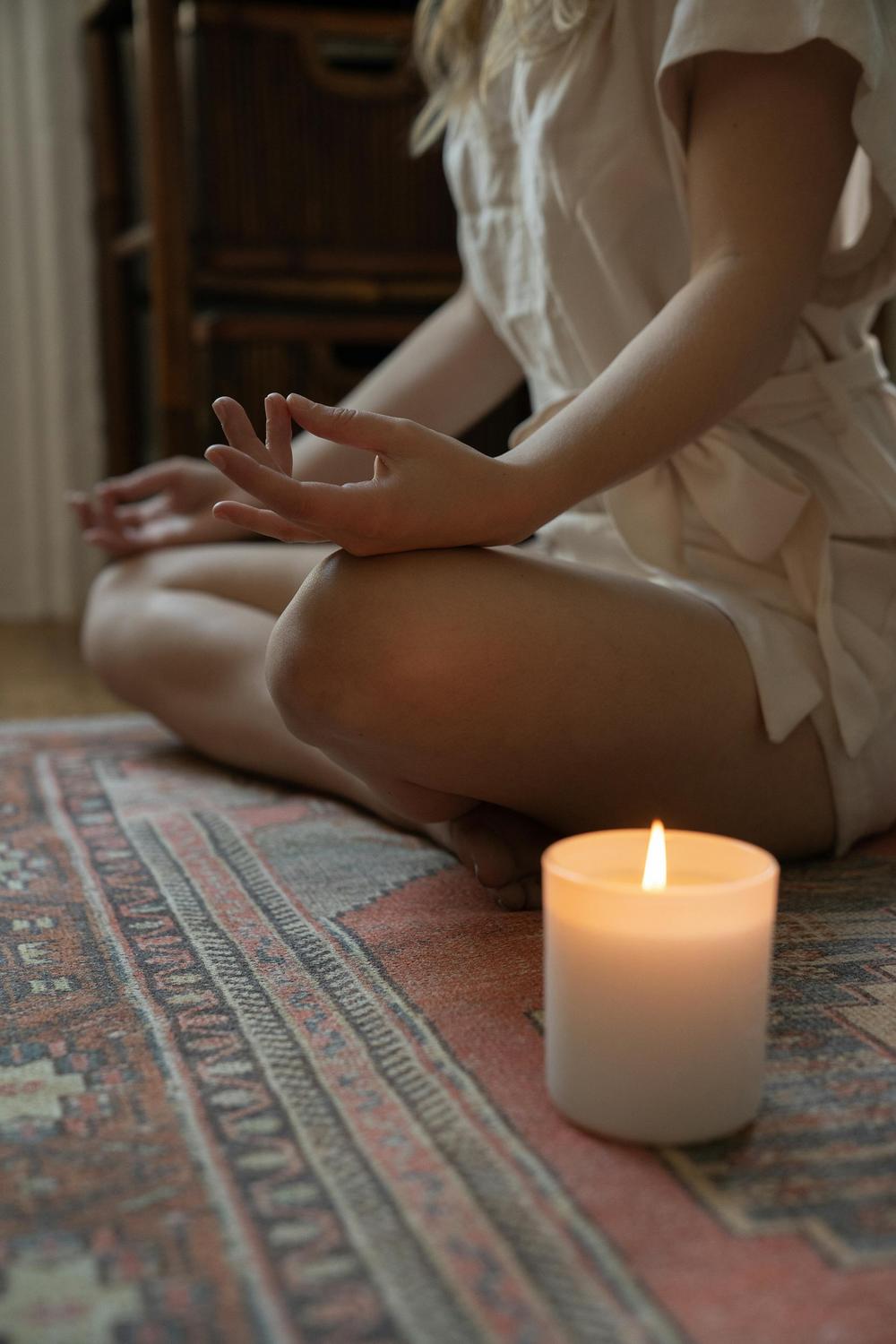
The practice unfolds through a carefully structured methodology. Practitioners position themselves comfortably, maintaining an upright spine in a meditative posture such as Sukhasana (easy pose). A candle, ideally pure beeswax to avoid synthetic fragrances, sits at eye level approximately 60 to 100 centimetres away in a dark, draft-free room. After establishing calm through several deep breaths, practitioners open their eyes and direct their gaze toward the centre of the flame—specifically, just above the wick tip where the flame burns brightest.
The critical instruction involves maintaining this focused gaze without blinking for as long as comfortable, typically beginning with one to five minutes for novices. As the eyes naturally water—a cleansing response rather than discomfort—practitioners then gently close their eyes and shift attention to visualising the flame’s afterimage at the third eye centre. This transition from external to internal focus trains the mind’s capacity to sustain attention across different perceptual domains.
Consider the following progression framework for developing your practice:
| Experience Level | Session Duration | Practice Frequency | Rest Periods | Key Focus |
|---|---|---|---|---|
| Beginner (Weeks 1-4) | 1-5 minutes | Daily | Brief eye-closure between rounds | Establishing steady gaze, reducing blinking |
| Intermediate (Months 2-3) | 10-15 minutes | 5-6 times weekly | 30-second palming after session | Extending gaze duration, deepening internal visualisation |
| Advanced (Month 4+) | 20-30 minutes | Daily | 2-week break every 2 months | Seamless transition to internal focus, extended afterimage retention |
The practice concludes with palming—cupping the hands over closed eyes—to soothe any eye fatigue and integrate the meditative state. This structured approach ensures progressive development whilst respecting physiological limits.
What Does Scientific Research Reveal About Trataka’s Benefits?
Contemporary neuroscience has begun validating what ancient yogic texts claimed centuries ago: trataka meditation produces measurable improvements in cognitive function, attention, and mental health outcomes. A 2021 study published in Frontiers in Psychology demonstrated that even a single trataka session improved working memory, spatial memory, and spatial attention in participants, as measured through the Corsi-Block Tapping Task—a standardised neuropsychological assessment.
The attention-enhancing effects prove particularly robust. A 2016 investigation revealed that trataka practitioners showed a 26.05% improvement in selective attention, cognitive flexibility, and response inhibition on the Stroop colour-word test, compared to just 10.68% improvement in control groups. These findings suggest that “controlling eye movements directly impacts brain activity and cognitive processing capacity,” as researchers noted in a comprehensive 2021 narrative review examining 37 articles on the practice.
The mechanism underlying these cognitive benefits relates to how our brains process visual information. Approximately 80% of sensory data processed by the brain arrives through vision, making the eye-brain connection a primary channel for neural activity. By voluntarily suppressing the constant saccadic movements that normally scatter our attention, practitioners may entrain brain rhythms within the alpha and beta frequency bands (9-22 hertz), patterns associated with focused attention and reduced mind-wandering.
Research into mental health applications has yielded promising results. A 2020 study examining adolescent students found marked decreases in anxiety symptoms following trataka practice. The National Center for Complementary and Integrative Health, part of the United States National Institutes of Health, reported moderate evidence that meditation practices incorporating focused attention elements demonstrated effectiveness in reducing anxiety and depression across multiple studies involving over 12,000 participants.
Australian research adds further weight to these findings. The Australian Longitudinal Study on Women’s Health found that yoga and meditation practices—which often incorporate trataka elements—moderated the relationship between negative life events and depressive symptoms, suggesting these techniques build psychological resilience. Furthermore, a 2012 Australian National Yoga Survey of 2,567 practitioners found that 53.3% reported their health conditions were “much better” with regular practice, with stress management representing the primary mental health motivation at 15.63% of reported conditions.
The evidence regarding eye health specifically presents a more nuanced picture. Whilst the Hatha Yoga Pradipika proclaimed that “trataka eradicates all eye diseases, fatigue, and sloth,” modern research offers qualified support. Studies in 2018 and 2021 suggested trataka exercises may lower intraocular pressure in specific populations, though a 2021 narrative review concluded that strong evidence for treating eye disorders remains elusive. The consensus amongst researchers centres on trataka’s capacity to strengthen extraocular muscles, improve eye relaxation, and reduce eye strain—benefits particularly relevant given contemporary screen usage patterns.
Perhaps most intriguingly, 2019 research involving 1,654 participants demonstrated that meditation practices improved sleep quality more effectively than education-based treatments. Australian practitioners have reported deepened sleep and relief from insomnia, suggesting that the practice’s effects extend beyond the meditation session itself into improved restorative physiology.
Who Should Practice (or Avoid) Trataka Meditation?
Trataka meditation’s accessibility makes it suitable for most individuals seeking enhanced focus and mental clarity, yet specific conditions warrant caution or contraindication. The practice proves particularly valuable for those experiencing attention difficulties, chronic stress, digital eye strain, or those seeking to deepen their meditation practice beyond breath-focused techniques.
Individuals with certain medical conditions should exercise caution or avoid the practice entirely. Those with epilepsy or seizure disorders should not practice candle gazing, as flickering flames can trigger photosensitive seizures. Persons with cataracts, severe myopia (nearsightedness), glaucoma, or severe astigmatism should consult healthcare providers before attempting trataka, as the sustained visual focus may exacerbate certain conditions or prove uncomfortable.
The practice also contradicts for individuals with a history of psychosis or schizophrenia, as intense meditative practices may trigger dissociative episodes in vulnerable individuals. Anyone experiencing severe dry eye conditions or prone to persistent headaches should approach the practice cautiously, beginning with very brief sessions and discontinuing if symptoms worsen.
Critical safety parameters must govern practice. Never force or strain the gaze—discomfort signals the need for rest, not perseverance. Sessions should never exceed 10 minutes initially, with progressive increases occurring only over weeks or months. Practitioners should implement two-week rest periods every two months to prevent potential retinal fatigue. The eyes should blink naturally if dryness occurs; the practice aims to develop concentration, not endurance of physical discomfort.
Environmental safety considerations also apply. Never leave candles unattended, keep them away from children and pets, and ensure the practice space remains free from drafts that might cause flame flickering or fire hazards. The stable, controlled environment serves both safety and meditative effectiveness.
Australian healthcare providers have recognised meditation’s therapeutic potential, with two-thirds of general practitioners referring patients to yoga and meditation practices. This professional endorsement reflects growing acceptance of evidence-based complementary approaches within mainstream healthcare. However, it remains essential to understand that trataka complements rather than replaces professional mental health treatment when clinical conditions exist.
How Can You Integrate Trataka Into Your Daily Wellness Routine?
Successful integration of trataka meditation into contemporary lifestyles requires thoughtful scheduling, appropriate environmental preparation, and realistic expectations about progression. The practice’s brevity—beginning with just one to five minutes daily—makes it remarkably compatible with even demanding schedules, yet its simplicity should not be mistaken for ease. Sustained visual focus challenges deeply ingrained habits of mental and visual restlessness.
Establishing a consistent practice time enhances adherence and deepens effects. Many practitioners find early morning sessions, before the day’s demands fragment attention, particularly effective. The mind arrives relatively fresh, and the practice establishes a focused mental state that can pervade subsequent activities. Alternatively, evening sessions before bed may support the transition to sleep by calming mental activity, though practitioners should experiment to discover their optimal timing.
The practice space requires minimal preparation but benefits from consistent use of the same location. Select a quiet area where you can sit comfortably without interruption, with sufficient space to place the candle at eye level when seated. Darkness or dim lighting enhances focus on the flame whilst reducing external visual distractions. Temperature should allow comfort without requiring constant adjustment, as physical restlessness undermines mental stillness.
Trataka integrates seamlessly with other wellness practices. Many practitioners precede candle gazing with pranayama (yogic breathing exercises) to calm the nervous system and deepen relaxation. Others follow trataka with traditional seated meditation, finding the enhanced concentration carries forward into breath or mantra practices. The practice can also conclude a yoga asana sequence, channelling physical energy into mental focus.
Progression should follow gentle, sustainable increments. The first month might maintain one to five-minute sessions whilst establishing consistent daily practice. Month two could extend to eight minutes, with month three reaching 10 to 12 minutes. Beyond three months, practitioners might explore 15 to 20-minute sessions, always respecting the recommendation for periodic rest intervals to avoid eye fatigue.
Monitoring your practice through brief journaling can reveal patterns and progress. Note the duration you achieved without blinking, the clarity of the afterimage during internal focus, and any changes in your daily capacity for sustained attention. Many practitioners report noticing improved focus during work tasks, reduced mind-wandering during conversations, and enhanced presence in daily activities—benefits extending well beyond the formal practice period.
The practice’s power lies partly in its simplicity: one flame, one focus, one moment of sustained attention. In an age where our consciousness fragments across countless stimuli, this deliberate cultivation of singular focus represents both ancient wisdom and contemporary necessity.
Reclaiming Attention Through Ancient Practice
As we advance further into 2026, the collision between accelerating digital demands and our fundamentally unchanged neurobiology intensifies. The human brain evolved to focus deeply on single tasks, yet modern life demands rapid attention-switching across dozens of platforms and stimuli. Trataka meditation offers not merely a respite from this cognitive overload, but a systematic training methodology for strengthening the neural networks that govern attention, working memory, and mental clarity.
The convergence of ancient yogic wisdom with contemporary neuroscience reveals that our ancestors understood profound truths about consciousness that researchers are only now beginning to quantify. The simple act of gazing steadily at a flame engages complex neural mechanisms, from thalamic filtering to autonomic regulation, producing measurable improvements in cognitive performance and psychological wellbeing.
For Australians navigating the demands of modern professional and personal life, trataka presents an accessible, evidence-supported practice requiring minimal equipment and modest time investment. Its integration within a holistic approach to wellness—encompassing movement, nutrition, sleep, and social connection—amplifies its benefits whilst respecting the multifaceted nature of human health.
The practice reminds us that profound transformation need not require complex interventions or expensive technologies. Sometimes, the most powerful tools remain the simplest: a candle, a steady gaze, and the ancient human capacity to direct awareness with intention.
Looking to discuss your health options? Speak to us and see if you’re eligible today.
How long does it take to see benefits from trataka meditation?
Research indicates that measurable improvements in working memory and spatial attention can occur after even a single trataka session, though these acute effects represent just the beginning. Consistent daily practice over four to six weeks typically produces more stable improvements in concentration, mental clarity, and stress resilience. The 2016 study demonstrating 26.05% improvement in selective attention involved regular practitioners, suggesting that sustained practice yields compounding benefits. Individual responses vary based on baseline attention capacity, practice consistency, and session duration, with most practitioners reporting subjective improvements within two to three weeks.
Can trataka meditation damage my eyes if practised incorrectly?
When practised according to established guidelines, trataka poses minimal risk to eye health. The key safety principles include never forcing the gaze past comfort, limiting initial sessions to five minutes, allowing natural tears to flow without resistance, and implementing two-week rest periods every two months. The practice should never cause pain—only mild fatigue followed by a refreshed sensation. Individuals with pre-existing eye conditions should consult healthcare providers before beginning. The 2021 narrative review found no evidence of harm from proper practice, though forcing sustained gaze beyond natural tolerance could potentially strain eye muscles or exacerbate dry eye conditions.
What’s the difference between trataka and simply staring at a candle?
Trataka meditation differs from passive candle observation through several critical elements. It involves conscious, sustained attention with a specific focus on the flame’s center point, requiring active engagement rather than distracted gazing. The practice incorporates a structured methodology including preparatory breathing, progressive timing, and transition to internal visualization of the afterimage. These elements differentiate authentic trataka from casual flame observation, yielding documented neurological and cognitive benefits.
How does trataka compare to other meditation techniques for improving focus?
Trataka occupies a unique position by combining visual concentration with traditional contemplative practice. Unlike mindfulness meditation, which cultivates open awareness of thoughts and sensations, trataka employs a specific external focal point to anchor attention. Compared to breath-focused meditation, trataka leverages the eye-brain connection—given that 80% of sensory data arrives through vision—potentially offering more accessible benefits for visually-oriented individuals. Research suggests that trataka can produce improvements in working memory and spatial attention that exceed those of general relaxation techniques.
Is it necessary to use a candle, or can I practise trataka with other objects?
Traditional trataka extends beyond candle flames to include various focal objects, such as the rising or setting sun, black dots, or geometric symbols. However, candle gazing remains the most widely practiced and researched form due to its optimal balance between visual interest and accessibility. Beginners are generally advised to master candle trataka before exploring alternative focal objects under expert guidance.