Every night, your brain orchestrates one of the most sophisticated biological transitions known to neuroscience – the seamless shift from wakefulness into sleep. Yet for nearly 48% of Australian adults who report at least two sleep-related problems, this transition is far from seamless. Behind each successful – or failed – passage into restorative sleep lies a remarkable structure buried deep within the brain: the thalamus. Understanding the thalamus and sleep state switching is not merely an academic exercise; it is foundational to understanding why sleep health has become one of Australia’s most pressing public health priorities.
What Is the Thalamus, and Why Is It Central to Sleep?
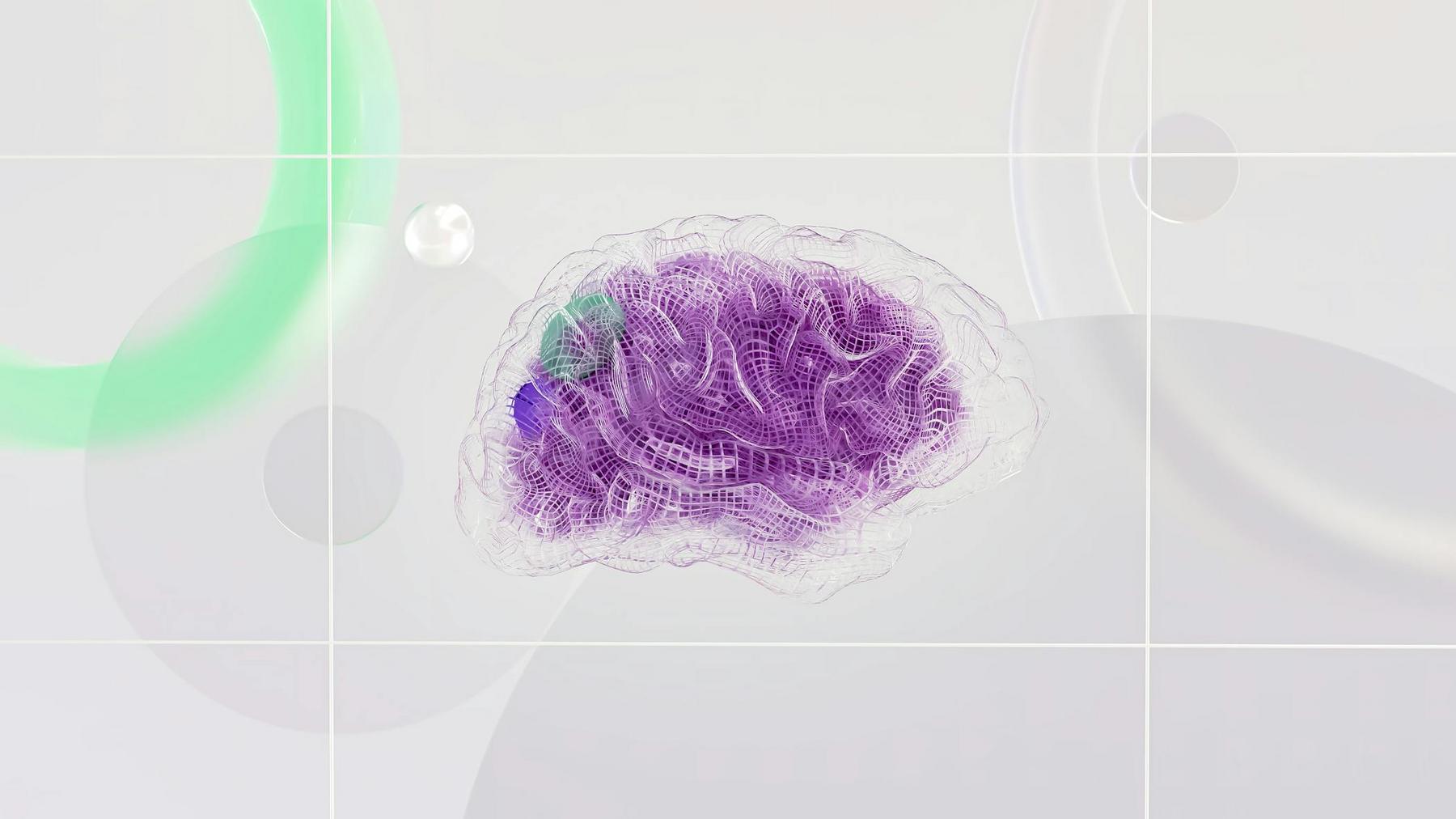
The thalamus is a large, paired grey matter structure positioned at the centre of the brain, situated between the brainstem and the cerebral cortex. Long described as the brain’s primary relay station, it processes and transmits virtually all sensory and motor information – with the notable exception of olfaction – before forwarding those signals to the appropriate cortical regions.
However, reducing the thalamus to a passive relay point profoundly underestimates its role. Contemporary neuroscience, including research published in Nature Communications (2022) and Nature Neuroscience (2018), has firmly established the thalamus as an active, multi-level regulatory system for sleep and wakefulness. It does not merely transmit signals; it controls which signals reach consciousness, determines when the brain transitions between sleep states, and actively generates the oscillatory rhythms that define sleep architecture.
The thalamus is composed of multiple specialised nuclei – discrete clusters of neurons, each responsible for processing particular categories of information and coordinating specific aspects of the sleep-wake cycle.
How Does the Thalamus Actually Switch Between Sleep and Wakefulness?
The mechanism by which the thalamus governs sleep state switching is elegantly governed by membrane potential regulation and the neuronal firing modes it produces.
Burst Mode: The Sleep State
During drowsiness and NREM (non-rapid eye movement) sleep, thalamic neurons adopt a hyperpolarised membrane potential – effectively, a reduced electrical charge that shifts neurons into what is termed burst mode. In this configuration, T-type calcium channels become activated, producing brief, high-frequency bursts of action potentials rather than the sustained, proportional firing characteristic of waking. These bursts act less as faithful transmitters of incoming signals and more as detectors of state change, critically filtering out routine sensory input and preventing it from reaching conscious processing.
Tonic Mode: The Wake and REM State
During wakefulness and REM (rapid eye movement) sleep, thalamic neurons adopt a depolarised membrane potential, engaging tonic firing mode. Here, neuronal discharge frequency directly reflects the magnitude of incoming signals, enabling high-fidelity transmission of sensory information to the cortex. This mode underpins the rich, responsive sensory experience of being awake.
The transition between these two modes is not arbitrary. It is precisely regulated by a cascade of neuromodulatory inputs from the brainstem and hypothalamus, including acetylcholine, norepinephrine, serotonin, histamine, and GABA – each released in characteristic patterns tied to specific sleep-wake states.
The Flip-Flop Switch Model
The broader sleep-wake transition is governed by what researchers describe as a “flip-flop” switch model: a system of mutual inhibition between wake-promoting and sleep-promoting neuronal populations. Wake-promoting monoaminergic neurons – including noradrenergic neurons of the locus coeruleus and histaminergic neurons of the tuberomammillary nucleus – are reciprocally inhibited by GABAergic sleep-promoting neurons of the ventrolateral preoptic area (VLPO). This mutual suppression creates rapid, binary-like state transitions with minimal time spent in intermediate drowsy states, ensuring the brain commits fully to either sleep or wakefulness.
Which Thalamic Nuclei Play the Most Critical Roles in Sleep State Switching?
The thalamus is not a homogeneous structure. Its distinct nuclei fulfil specialised and sometimes opposing functions in regulating sleep.
| Thalamic Nucleus | Primary Sleep-Related Function | Firing Relationship to Sleep Oscillations |
|---|---|---|
| Anterior Nucleus (ANT) | Coordinates global sleep oscillations; facilitates memory consolidation | Slow oscillations precede neocortical slow oscillations by ~50 ms |
| Centromedial Thalamus (CMT) | Dual control of slow-wave onset and NREM-wake transitions; supports sleep recovery | Phase-advanced to cortical UP-states and NREM-wake transitions |
| Thalamic Reticular Nucleus (TRN) | Generates sleep spindles; mediates sensory gating; local sleep control | Critical for spindle generation via TRN-relay neuron interactions |
| Mediodorsal Nucleus (MD) | Consciousness, affect, memory | Activity follows neocortical slow oscillations by ~50 ms |
| Intralaminar Nuclei | Maintenance of alertness and arousal | Most active during wakefulness |
The Thalamic Reticular Nucleus (TRN): Local Sleep Architecture
The TRN forms an outer shell enveloping the thalamus and is composed entirely of inhibitory (GABAergic) neurons. It plays a powerful and highly regionalised role in sleep control. Crucially, different sectors of the TRN correspond to different sensory and functional domains – somatosensory, auditory, and limbic – and each generates distinct sleep patterns. The somatosensory sector, for instance, exhibits the most vigorous repetitive bursting and produces the densest sleep spindles in corresponding cortical areas, whilst limbic sectors fail to discharge in repetitive bursts altogether (Frontiers in Neuroscience, 2019). This heterogeneity allows the brain to implement region-specific sleep tailored to local neural circuit demands.
The Anterior Thalamus (ANT): The Active Orchestrator
Research published in Nature Communications (2022) identified the anterior thalamus as a fundamental active hub in coordinating human sleep oscillations – not merely a passive recipient of cortical leadership. Anterior thalamic slow oscillations precede neocortical slow oscillations by approximately 50 milliseconds, demonstrating that the thalamus leads the synchronisation of global sleep rhythms rather than simply following the cortex. This finding fundamentally revises our understanding of thalamic function during sleep.
What Are Sleep Spindles and Slow Oscillations, and Why Do They Matter?
Two of the most characteristic electrophysiological signatures of NREM sleep – sleep spindles and slow oscillations – are both critically dependent on thalamic function.
Sleep Spindles (7–15 Hz)
Sleep spindles are brief bursts of waxing and waning oscillatory activity lasting approximately one second, generated by reciprocal interactions between the TRN and thalamocortical relay neurons. They are most densely expressed in central (primary sensorimotor) cortical derivations and are essential for synaptic plasticity and memory consolidation. Spindle density correlates with learning capacity, and spindles are temporally coupled with hippocampal sharp-wave ripples (140–200 Hz) – a pairing that synchronises hippocampal memory reactivation with periods of cortical receptivity.
Slow Oscillations (<1 Hz) and Delta Waves (1–4 Hz)
Slow oscillations reflect alternating UP-states (periods of coordinated neuronal activity) and DOWN-states (periods of neuronal silence). They are homeostatically regulated – increasing in power following extended wakefulness – and serve as the temporal scaffold upon which spindles and hippocampal ripples are nested. The coordinated interplay of these oscillations drives the hippocampal-neocortical dialogue essential for consolidating declarative (fact-based and episodic) memory.
Slow-wave power is also experience-dependent: targeted sensory stimulation during wakefulness enhances slow-wave power in the corresponding cortical region during subsequent sleep, indicating that the sleeping brain continues to process waking experience in a highly organised manner.
How Does the Thalamus Gate Sensory Information During Sleep?
One of the most consequential functions of the thalamus during sleep is sensory gating – the selective filtering of incoming sensory signals to prevent their conscious processing, thereby protecting sleep continuity.
During NREM sleep, thalamic relay neurons in burst mode are rendered largely refractory to standard sensory inputs. The combination of neuronal hyperpolarisation and GABAergic inhibition from the TRN effectively raises the arousal threshold, ensuring that routine environmental stimuli – ambient noise, light touch, background sounds – do not penetrate to cortical awareness. Yet this gating is not absolute. Salient or meaningful stimuli – the sound of a child’s cry, a fire alarm – retain the capacity to breach the thalamic filter and initiate arousal.
Different subnetworks of TRN neurons are specialised for this state-dependent filtering: those projecting to sensory relay areas become particularly active during NREM sleep, whilst those projecting to limbic areas are preferentially active during arousal transitions. This sectorial organisation allows the sleeping brain to maintain a degree of vigilance appropriate to survival without sacrificing sleep continuity for irrelevant sensory noise.
What Is the Impact of Disrupted Thalamic Sleep Regulation in Australia?
The public health implications of impaired thalamic sleep function extend well beyond individual wellbeing. Sleep disorders cost Australia an estimated $5.1 billion per year, comprising direct healthcare costs, care of associated medical conditions, and substantial productivity losses. Quality-of-life losses attributed to sleep disorders represent an additional $31.4 billion annually (Sleep Health Foundation/Deloitte Access Economics).
The most prevalent sleep disorders in Australia include:
- Obstructive sleep apnoea (OSA): Prevalence up to 38% – the most common sleep disorder in the country
- Insomnia: Affecting approximately 3–7% of the population chronically
- Restless legs syndrome: Affecting 5–10% of Australians
Sleep disorders have been attributed to 10.1% of depression cases, 5.3% of strokes, 4.5% of workplace injuries, and 4.3% of motor vehicle accidents in Australia. Recognising this burden, the Australian Government’s 2023 Bedtime Reading report formally elevated sleep health as a national priority alongside fitness and nutrition, integrating sleep guidelines into the National Preventive Health Strategy.
At the neurological level, thalamic dysfunction is directly implicated in disrupted sleep architecture, impaired memory consolidation, consciousness disorders, and cognitive decline. The centromedial thalamus (CMT), in particular, has been shown to play a central role in sleep recovery following deprivation – with its activity levels predicting the efficiency with which the brain restores slow-wave power after sleep debt accumulates.
The Thalamus as an Active Architect of Restorative Sleep
Far from a passive conduit, the thalamus stands as the principal architect of sleep state switching – a structure of extraordinary functional sophistication that initiates, sustains, synchronises, and terminates the distinct states of human sleep. Through its heterogeneous nuclei, its dual neuronal firing modes, its capacity for precise neuromodulatory sensitivity, and its bidirectional dialogue with the cerebral cortex, the thalamus transforms the sleeping brain from a passive, inactive state into a highly organised, restorative biological programme.
The anterior thalamus leads global slow oscillations; the centromedial thalamus exercises dual control over slow-wave generation and awakening; the thalamic reticular nucleus sculpts region-specific spindle activity and gates sensory intrusion; and the broader thalamocortical network enables the hippocampal-cortical exchanges upon which memory and cognitive function depend.
Understanding the thalamus and sleep state switching is, at its core, understanding one of the most vital systems in human neurobiology – and one whose optimal function is indispensable to long-term health, cognition, and quality of life.
<!– wp:rank-math/faq-block {"questions": [{"id": "faq-question-1", "title": "What is the role of the thalamus in sleep state switching?", "content": "The thalamus regulates sleep state switching through neuronal firing mode transitions (burst mode during NREM sleep and tonic mode during wakefulness and REM sleep), neuromodulatory sensitivity, and bidirectional communication with the cerebral cortex. Its distinct nuclei – including the anterior nucleus, centromedial thalamus, and thalamic reticular nucleus – each contribute specific regulatory functions to the sleep-wake cycle.", "visible": true}, {"id": "faq-question-2", "title": "What are sleep spindles and how does the thalamus generate them?", "content": "Sleep spindles are 7–15 Hz oscillatory bursts lasting approximately one second, generated by reciprocal interactions between the thalamic reticular nucleus (TRN) and thalamocortical relay neurons during NREM sleep. They are essential for synaptic plasticity, memory consolidation, and are tightly coupled with hippocampal ripples to facilitate the transfer of memory from the hippocampus to the cortex.", "visible": true}, {"id": "faq-question-3", "title": "How does the thalamus filter sensory information during sleep?", "content": "During NREM sleep, thalamic relay neurons in burst mode – combined with inhibitory input from the thalamic reticular nucleus – raise the arousal threshold significantly, blocking routine sensory signals from reaching cortical consciousness. This sensory gating mechanism protects sleep continuity whilst preserving selective responsiveness to biologically salient stimuli.", "visible": true}, {"id": "faq-question-4", "title": "Why is slow-wave sleep important for memory, and what is the thalamus's role?", "content": "Slow-wave sleep is critical for the consolidation of declarative (fact-based and episodic) memory. The thalamus coordinates the slow oscillations (