
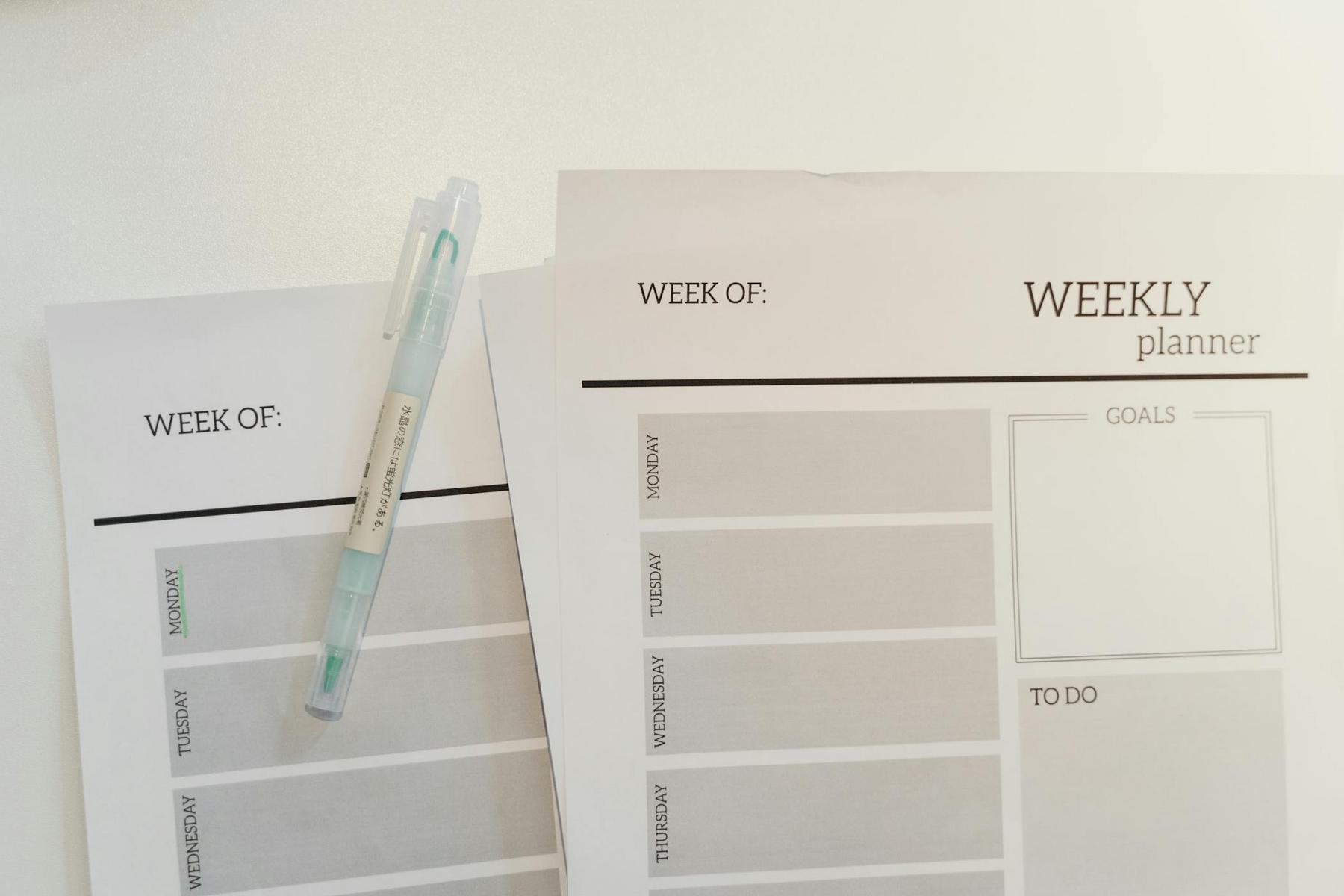
Every week arrives with the same fixed allocation: 168 hours. Not a minute more, not a minute less. Yet the near-universal experience of Australians—across industries, age groups, and lifestyles—is one of time scarcity. Schedules feel insurmountable, wellbeing is deprioritised, and weeks collapse into one another with little sense of intentionality or purpose.
This is precisely the paradox that the 168 hours concept was designed to disrupt.
What Is the 168 Hours Concept and Why Does It Matter for Australians?
The 168 hours concept is grounded in a straightforward mathematical premise: every week contains exactly 168 hours (24 hours multiplied by 7 days). The framework challenges the pervasive myth of time scarcity by demonstrating that, with appropriate awareness and intentional allocation, individuals possess considerably more discretionary time than they typically perceive.
Vanderkam’s foundational argument is not that people are lazy or disorganised—it is that they are operating without awareness. The failure is not one of effort; it is one of visibility. Most individuals do not know where their time actually goes, which renders meaningful planning effectively impossible.
The 168 hours concept replaces assumption with data. Its first and most critical step is the creation of a time log across a full week, tracking all activities in 30-minute or hourly increments. This single act of documentation frequently reveals a significant discrepancy between perceived and actual time usage—a discovery that, for many, is both confronting and liberating.
How Does the Weekly Mathematics of 168 Hours Break Down in Practice?
Understanding the numerical reality underpinning the 168 hours concept is essential before implementing its principles. The table below illustrates two common weekly time allocation scenarios based on Vanderkam’s framework, enabling a clear comparison between committed and discretionary hours.
| Activity | Conservative Estimate (hrs/week) | Standard Estimate (hrs/week) |
|---|---|---|
| Sleep (7–8 hrs/night) | 49 | 56 |
| Work (including commute) | 40 | 50 |
| Personal care and grooming | 5 | 7 |
| Meals (preparation, eating, clean-up) | 10 | 14 |
| Total Committed Hours | 104 | 127 |
| Discretionary Hours Remaining | 64 | 41 |
Even under the most demanding scenario, the average person retains more than 40 hours of discretionary time per week. It represents a meaningful opportunity for exercise, personal development, relationship investment, and holistic wellness—provided those hours are claimed with intention rather than surrendered to habitual, low-value activity.
Research supporting Vanderkam’s framework indicates that the average worker spends only 39% of their professional time on genuinely meaningful work, with the remaining 61% absorbed by meetings, email management, and administrative tasks. This systemic inefficiency within committed hours makes the reclamation of discretionary time all the more critical.
What Are the Core Principles That Drive the 168 Hours Weekly Time Perspective?
The 168 hours concept is not merely a scheduling technique—it is a philosophy of deliberate living. Its implementation rests upon several interrelated principles that, when applied consistently, produce measurable improvements in productivity, wellbeing, and life satisfaction.
1. Time Tracking and Honest Audit
The foundation of the 168 hours concept is the time audit. Without empirical data on how one’s week is actually structured, all subsequent planning remains speculative. A rigorous one-week time log—covering everything from professional commitments and exercise to meals and screen time—provides the informational substrate upon which intentional allocation is built.
2. Identifying Core Competencies
Once a clear picture of current time use emerges, individuals are encouraged to identify their personal core competencies: those activities and skills that generate the greatest professional and personal value. Research from Gallup indicates that workers who utilise their strengths daily are six times more engaged and significantly less likely to disengage from their roles. The 168 hours framework positions these high-impact activities as scheduling priorities.
3. The Eisenhower Matrix Applied to Weekly Planning
A critical organisational tool within the 168 hours framework is the Eisenhower Matrix, which categorises tasks across two axes—urgency and importance—producing four actionable quadrants.
Urgent and Important
Tasks requiring immediate attention and direct action.
Important but Not Urgent
High-value activities that should be proactively scheduled, including exercise, strategic planning, and relationship investment.
Urgent but Not Important
Tasks best delegated to others where operationally possible.
Neither Urgent nor Important
Activities to be minimised or eliminated entirely from the weekly schedule.
4. Time Blocking for Structured Intentionality
Time blocking—the practice of dedicating specific periods to defined activities—is a cornerstone of the 168 hours methodology. Rather than approaching the week as an undifferentiated expanse to be filled reactively, time blocking creates deliberate architecture across the full 168 hours. This includes protected periods for deep work, physical activity, rest, family engagement, and personal reflection.
5. Weekly Rather Than Daily Balance
Perhaps the most liberating principle within the 168 hours concept is the reframing of work-life balance as a weekly—not daily—metric. On any given day, professional demands may dominate; on others, personal life takes precedence. The weekly time perspective accommodates this natural variability without generating guilt or a sense of failure. Balance, in this framework, is an aggregate achieved across 168 hours—not a daily performance standard.
What Does the 168 Hours Concept Reveal About Australian Wellbeing and Workplace Health?
The relevance of the 168 hours concept to the Australian context is both urgent and evidence-based. Data from the Corporate Mental Health Alliance Australia (CMHAA) indicates that 46% of Australian employees report some degree of burnout, with 45% assessing their current performance as lower than usual. Among those performing below their usual capacity, 60% report burnout symptoms—a figure that underscores the systemic nature of this challenge.
Work stress is identified as a significant stressor by 52% of Australians, driven by factors including mental load (38%), emotional demands of work (23%), and diminished control over work arrangements (27%). The consequences extend beyond individual wellbeing: employees experiencing mental or emotional health concerns alongside work stress lose an average of 38.5 days per year to presenteeism—reduced performance whilst physically present at work.
Equally significant is the direct relationship between time allocation and physical health. Australian Government physical activity guidelines (2024) recommend that adults aged 18–64 engage in at least 30 minutes of moderate-to-vigorous intensity physical activity on most days, complemented by muscle-strengthening activities at least twice weekly. Research published in BMJ Open (2024) found that individuals who exercise at least twice weekly are significantly less likely to report difficulties with sleep—a key indicator of overall health and cognitive function.
Further, compositional data analysis from the University of Melbourne found that reallocating 60 minutes from screen time to physical activity is associated with a 4.2% reduction in body fat, a 2.5% improvement in psychosocial health, and a 0.9% improvement in academic performance. These findings confirm that time allocation is not merely a productivity matter—it is a measurable determinant of health outcomes.
How Can the 168 Hours Framework Be Applied to Build a Sustainable Weekly Wellness Routine?
Translating the 168 hours concept into actionable weekly planning requires a structured, values-aligned process. The following implementation framework is grounded in the core principles of the methodology and the Australian health guidelines outlined in this article.
Step 1: Calculate Non-Negotiable Commitments
Begin by accounting for sleep (targeting 7–9 hours nightly, or 49–63 hours weekly), work, and essential personal care. This establishes the baseline of committed hours.
Step 2: Identify Remaining Discretionary Time
Subtract committed hours from 168. Even in demanding schedules, this figure typically exceeds 40 hours—a reality that the weekly time perspective makes impossible to ignore.
Step 3: Align Discretionary Time with Personal Values and Core Competencies
Determine which activities—exercise, family time, personal development, leisure—are most aligned with long-term priorities. The 168 hours concept insists these must be scheduled deliberately, not left to chance.
Step 4: Apply Time Blocking Across the Week
Assign specific blocks to high-priority wellness activities. The World Health Organisation recommends 150–300 minutes of moderate-intensity aerobic activity per week—a commitment that, when contextualised within 168 hours, amounts to less than 3% of available time.
Step 5: Protect Sleep Boundaries
Sleep is the non-negotiable foundation of cognitive performance and physical recovery. The 168 hours framework treats sleep not as a variable to be compressed under pressure, but as a fixed, protected allocation of the weekly schedule.
Step 6: Schedule Quality Social and Relational Time
Positive workplace relationships are cited by 68% of Australian employees as having a beneficial impact on their wellbeing. Intentional allocation of relational time—not merely incidental proximity—is a measurable contributor to sustained wellbeing across the 168-hour week.
Step 7: Review and Recalibrate Weekly
The 168 hours concept is not a static plan. It is a living framework, reviewed and adjusted each week in response to new demands, insights, and emerging priorities.
The 168 Hours Weekly Time Perspective as a Foundation for Holistic Planning
The 168 hours concept represents more than a time management strategy. It is an epistemological shift—a move from the passive experience of time passing to the active stewardship of time as a finite and invaluable resource. When individuals begin to see their week as a cohesive unit of 168 hours rather than a series of disconnected, reactive days, the possibility of coherent, sustainable wellness planning becomes genuinely tangible.
For Australians navigating the compounding pressures of professional demands, financial stress, and the erosion of boundaries between work and personal life, this framework offers a structured, evidence-aligned methodology for reclaiming agency over one’s own schedule. The data is unambiguous: time is not the limiting factor. Awareness and intentionality are.
Holistic wellbeing is not constructed in single, extraordinary moments—it is built hour by deliberate hour, across the 168 that every week provides without exception.
Looking to discuss your health options? Speak to us and see if you’re eligible today.
What is the 168 hours concept and who developed it?
The **168 hours concept** is a time management and life-planning framework developed by author and productivity expert Laura Vanderkam, introduced in her 2010 book *168 Hours: You Have More Time Than You Think*. It is based on the mathematical fact that every week contains exactly 168 hours, and it argues that most individuals have significantly more discretionary time available than they perceive—provided they track and allocate that time with deliberate intention.
How does the 168-hour weekly time perspective differ from traditional daily time management?
Traditional time management approaches focus on optimising individual days, which can create pressure and a distorted sense of failure when daily balance is not achieved. In contrast, the **168-hour weekly time perspective** reframes balance as a weekly aggregate, acknowledging that some days may be dominated by professional demands while others by personal life. This broader lens reduces stress and accommodates natural variability, fostering more sustainable and realistic planning.
How many discretionary hours does the average Australian worker have each week?
According to the **168 hours framework**, after accounting for sleep (approximately 49–56 hours per week) and work commitments (40–50 hours per week), the average person retains between 41 and 64 hours of discretionary time each week. Even conservative estimates reveal a substantial amount of time available for wellness, relationships, and personal development that is often lost to unexamined, low-value habits.
Why is burnout so prevalent in Australia, and can the 168 hours approach help address it?
Data from the Corporate Mental Health Alliance Australia (CMHAA) indicates that 46% of Australian employees report some degree of burnout, driven by factors such as mental overload, diminished control over work, and blurred boundaries between professional and personal life. The **168 hours concept** addresses these issues by providing a structured framework for identifying low-value time expenditure, protecting recovery and leisure time, and establishing deliberate boundaries—all of which are associated with reduced stress and improved performance outcomes.
How does weekly time allocation relate to physical health outcomes in Australia?
Intentional time allocation is directly linked to physical health. Australian Government guidelines (2024) recommend at least 30 minutes of moderate-to-vigorous physical activity on most days, while WHO guidelines suggest 150–300 minutes per week. Within the **168-hour framework**, meeting these recommendations requires just 2–3% of total weekly time. Additionally, studies have shown that reallocating 60 minutes from sedentary screen time to physical activity can lead to significant improvements in body composition, psychosocial health, and even academic performance.