
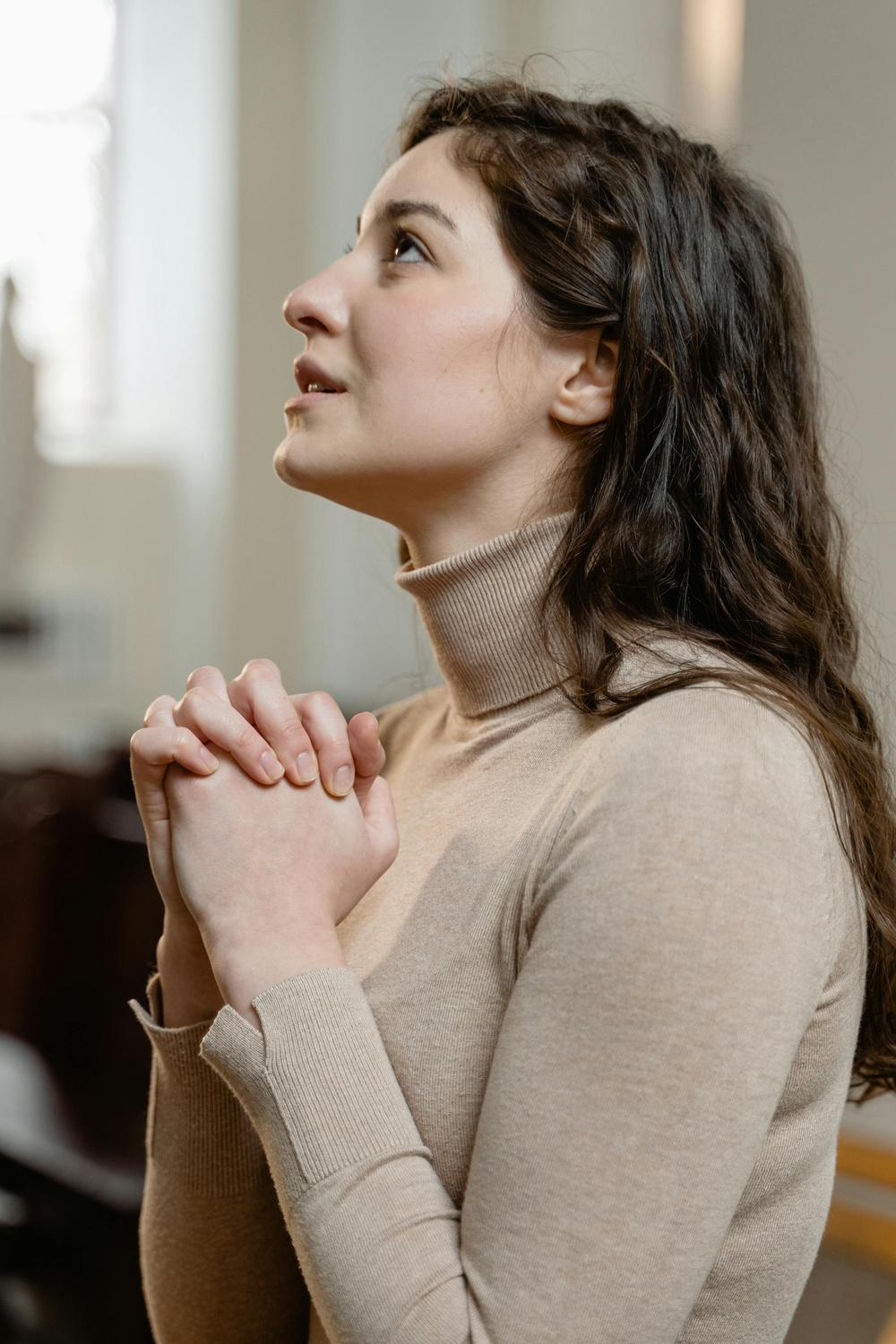
The Silence That Speaks: Why Ancient Contemplative Wisdom Is More Relevant Than Ever
In an era defined by relentless digital connectivity, fractured attention, and escalating societal demands, the capacity to dwell in deliberate silence has become one of the most countercultural acts imaginable. Yet for practitioners of centring prayer, this silence is not empty – it is, as Thomas Merton described, prayer “centered entirely on the presence of God.”
Centring prayer is a Christian contemplative practice that has captured the attention of theologians, neuroscientists, psychologists, and holistic wellness practitioners alike. Far from a New Age import, it is rooted in centuries of Christian mystical tradition, systematically revived for the modern world, and increasingly examined through rigorous empirical research. For Australians navigating the intersection of spiritual depth and evidence-informed wellbeing, understanding this practice offers a remarkable window into how ancient wisdom and contemporary science converge.
What Is Centring Prayer, and How Does It Differ from Other Forms of Christian Prayer?
At its core, centring prayer is a method of silent, receptive communion with God that operates through consent rather than petition. Unlike intercessory prayer, liturgical prayer, or vocal devotion, it does not rely on words, images, or structured thought. The Catholic Catechism’s description of contemplative prayer as “a simple gaze upon God in silence and love” captures its essential character: listening rather than speaking, receiving rather than requesting.
Critically, centring prayer is not a technique designed to empty the mind or produce relaxation – though these may occur as by-products. It is, at its foundation, a relational practice: a conscious, ongoing consent to God’s presence and action within the practitioner. This distinguishes it sharply from secular mindfulness, which emphasises open, non-judgmental awareness of present-moment experience without explicit reference to a divine relationship.
Where secular mindfulness employs open awareness – observing thoughts without attachment – centring prayer employs focused intention, anchored by a sacred word that symbolises the practitioner’s willingness to consent to God’s presence and action. Both approaches may produce comparable quieting of mental activity, but their underlying orientation and ultimate aim are categorically distinct.
What Are the Historical and Theological Roots of This Christian Contemplative Practice?
Centring prayer did not emerge from a vacuum. Its development in the 1970s by three Trappist monks – Father Thomas Keating, Father William Meninger, and Father Basil Pennington – at St Joseph’s Abbey in Spencer, Massachusetts, was a deliberate response to Vatican II’s invitation to renew the contemplative heritage of early Christianity in formats accessible to contemporary people.
The monks observed that spiritually hungry young people were turning to Eastern traditions, including Zen Buddhism and Transcendental Meditation, in search of depth that they could not find within their immediate Christian communities. Rather than lamenting this departure, the founders of centring prayer asked a profound question: what did the Christian contemplative tradition itself have to offer?
Their answer drew from an extraordinarily rich lineage:
- The Cloud of Unknowing – the anonymous 14th-century English mystical classic, which counsels releasing all thought and image in the approach to God
- The Desert Fathers and Mothers – early Christian monastics of the 3rd to 6th centuries whose practices of stillness and interior prayer formed the bedrock of the Western contemplative tradition
- Lectio Divina – the Benedictine monastic practice of contemplative Scripture reading
- Christian mystics including John Cassian, Teresa of Ávila, John of the Cross, Francis de Sales, and Thérèse of Lisieux
- Biblical foundations – most notably Matthew 6:6: “When you pray, go to your inner room, close the door and pray to your Father in secret”
The practice was formalised through the establishment of Contemplative Outreach following the first intensive centring prayer retreat in 1983, and it is now practised by Christians across denominational traditions worldwide, including a growing community of practitioners in Australia.
How Is Centring Prayer Practised? The Four Core Guidelines Explained
The genius of centring prayer as a Christian contemplative practice lies in its elegant simplicity. It requires no special equipment, no prior contemplative experience, and no particular setting beyond a degree of quiet. Its four core guidelines provide a structure that is simultaneously accessible and profound.
Guideline 1: Choose a Sacred Word
The practitioner selects a short word – typically one or two syllables – to serve as a symbol of their intention to consent to God’s presence and action. The word is sacred not by virtue of its meaning, but by virtue of the intention it represents.
Common examples include: God, Jesus, Abba, Love, Peace, Mercy, Come, Silence, Spirit, Mary, Let Go. The word should personally resonate with the practitioner.
Guideline 2: Settle and Introduce the Word
Sitting comfortably with eyes closed, the practitioner settles briefly into stillness before silently introducing the sacred word. This act of introduction represents a willingness to surrender control and open oneself to God’s action.
Guideline 3: Release Thoughts with Gentle Return
When the practitioner becomes engaged with thoughts – which include bodily sensations, feelings, images, and reflections, not merely conceptual thinking – they gently return to the sacred word. The approach is captured in what practitioners call the Four Rs: Resist no thought, Retain no thought, React to no thought, Return ever so gently to the sacred word.
This guideline reflects a profound spiritual insight: the practice is not about suppressing thoughts but about learning not to identify with them.
Guideline 4: Close in Silence
At the conclusion of the prayer period, the practitioner remains in silence with eyes closed for several minutes. This transition period is not merely a pleasant buffer – it serves the crucial function of integrating the interior atmosphere of the prayer into ordinary daily life.
The standard recommended duration is 20 minutes, ideally practised twice daily – typically in the morning and evening – though beginners are encouraged to begin with shorter sessions and build gradually.
What Does Scientific Research Reveal About the Effects of Centring Prayer on the Mind and Body?
The empirical investigation of contemplative practices has expanded dramatically over recent decades, and centring prayer – as a Christian contemplative practice – is increasingly included within this body of scholarship.
A landmark 2024 randomised controlled trial conducted at Johns Hopkins University examined 702 self-identifying Christians across three conditions: centring prayer with explicit religious framing, a neutral contemplative practice with secular framing, and a passive control group. Among its significant findings, the religious centring prayer group demonstrated substantially higher scores on the Mystical Experience Questionnaire and the Daily Spiritual Experience Scale, and was the only group to show significant increases in awe experiences – a psychological state associated with enhanced prosocial behaviour and broader wellbeing.
Smaller studies have demonstrated additional effects specific to centring prayer practice, including reductions in perceived stress, increased sense of surrender to God, improvements in hope and compassion, and enhanced mindfulness – which in turn correlates with improved sleep quality and increased physical activity.
The broader contemplative research literature – from which centring prayer practice cannot be entirely separated – documents a compelling array of neurological and physiological effects, summarised in the table below.
Comparative Overview: Centring Prayer vs. Secular Mindfulness vs. Other Christian Contemplative Practices
| Feature | Centring Prayer | Secular Mindfulness | Lectio Divina | Jesus Prayer |
|---|---|---|---|---|
| Primary orientation | Relational (with God) | Self-awareness | Scripture-based reflection | Repetitive devotional |
| Attention mechanism | Focused (sacred word) | Open awareness | Discursive then receptive | Rhythmic repetition |
| Role of words | Minimal (single word as anchor) | None required | Central (Scripture text) | Central (fixed phrase) |
| Neurological evidence | Emerging (positive early findings) | Extensive | Limited | Limited |
| Spiritual experience enhancement | Significant (RCT evidence) | Minimal | Moderate | Moderate |
| Suitable for beginners | Yes | Yes | Moderate learning curve | Yes |
| Required setting | Quiet, comfortable | Flexible | Quiet | Flexible |
| Session duration | 20 minutes (recommended) | Variable (8-45 min) | Variable | Variable |
| Tradition | Roman Catholic/Ecumenical | Secular/Buddhist-derived | Benedictine monastic | Eastern Orthodox |
How Does Centring Prayer Compare to Secular and Buddhist Contemplative Approaches?
This comparison is among the most academically significant questions in contemporary contemplative research. Both secular mindfulness-based interventions and centring prayer as a Christian contemplative practice produce measurable improvements across an array of psychological and physiological outcomes – including stress reduction, anxiety management, improvements in emotional regulation, and cognitive enhancements such as improved sustained attention and working memory.
However, the evidence increasingly suggests that the two approaches are not interchangeable in all contexts. Research indicates that religious or spiritual forms of contemplative practice produce superior outcomes in specific domains, including:
- Mystical and transcendent experience – religious centring prayer uniquely amplifies experiences of awe, divine intimacy, and spiritual depth
- Existential meaning-making – the relational, God-centred orientation of centring prayer provides a framework for suffering and uncertainty that secular approaches do not replicate
- Pain-related outcomes – religious meditation enhances behavioural pain tolerance compared with secular alternatives in certain study populations
- Depression outcomes in religious populations – some research suggests faith-integrated contemplative practice may produce superior outcomes for individuals with strong religious orientation, potentially due to enhanced meaning and existential support
The fundamental philosophical distinction is instructive: where Buddhist-derived meditation seeks detachment from self and suffering, centring prayer as Christian contemplative practice seeks intentional attachment to God, through whom the burdens of suffering and self are held with grace. Both paths cultivate stillness; only one frames that stillness as divine encounter.
How Is Christian Contemplative Practice Being Integrated Into Australian Holistic Wellness?
Australia represents a particularly fertile context for the growth of centring prayer and related Christian contemplative practices. Australian health authorities – including healthdirect.gov.au and Beyond Blue – increasingly recognise meditation and mindfulness as evidence-informed supports for stress reduction, anxiety management, sleep improvement, and chronic illness support.
The National Safety and Quality Health Service (NSQHS) Standards explicitly emphasise person-centred care that is sensitive to spiritual, cultural, and religious needs – a framework within which centring prayer sits with notable coherence. Australian healthcare professionals are increasingly encouraged to integrate spirituality into holistic care approaches, with ‘meaning’ and ‘purpose in life’ identified as central organising concepts.
The Contemplative Studies Centre at the University of Melbourne represents an important institutional expression of this integration, fusing contemplative wisdom with research, education, dialogue, and practice within an Australian academic context.
Internationally, Contemplative Outreach provides an extensive network of teaching, retreats, and community for centring prayer practitioners, with resources available at contemplativeoutreach.org.
What makes centring prayer particularly compelling from a practical and equity perspective is its extraordinary accessibility. It requires no equipment, minimal cost, and no specialised environment. It can be adapted to culturally meaningful frameworks, and it offers a cost-effective, deeply personal approach to supporting one’s interior life – attributes that make it particularly valuable for diverse Australian communities and underserved populations.
The Convergence of Ancient Wisdom and Modern Evidence
Centring prayer stands at a remarkable crossroads. It is, simultaneously, one of Christianity’s most ancient and most empirically examined contemplative practices – a tradition that stretches from the Desert Fathers of the 3rd century to randomised controlled trials published in the 21st.
Its essential claim is neither new nor complicated: that in deliberate, receptive silence, something genuinely transformative occurs. The growing body of neurological, psychological, cardiovascular, and immunological research on contemplative practice does not prove this claim in theological terms – but it does illuminate the profound depth of its wisdom. Ancient practices that have sustained human beings through millennia of uncertainty are now, measurably and reproducibly, shaping the structure and function of the human brain.
For Australians seeking to integrate depth of practice with evidence-informed wellbeing, centring prayer as a Christian contemplative practice offers not an escape from modern life, but a profoundly grounded, relationally oriented means of inhabiting it more fully.
What is centring prayer and is it the same as Christian meditation?
Centring prayer is a specific method of silent Christian contemplative practice developed in the 1970s by Trappist monks, drawing on centuries of Christian mystical tradition. While it shares common ground with Christian meditation broadly understood, it is distinct in its use of a sacred word as an anchor of intention rather than a mantra or Scripture text. It is closely related to, but not identical to, practices such as Lectio Divina or the Jesus Prayer.
How long should I practise centring prayer each day?
The recommended duration for centring prayer is 20 minutes per session, ideally practised twice daily – in the morning and evening. Research demonstrates that consistency of practice produces stronger effects than sporadic engagement, and measurable neurological and psychological changes can begin to emerge within four to eight weeks of regular daily practice.
Do I need to be Catholic or belong to a specific denomination to practise centring prayer?
No. Although centring prayer originated within the Roman Catholic Trappist monastic tradition, it has been embraced across Christian denominations and is practised ecumenically. Contemplative Outreach, the primary international support organisation for centring prayer, welcomes practitioners from all Christian backgrounds.
How is centring prayer different from secular mindfulness?
The core distinction is one of orientation and intention. Secular mindfulness, largely derived from Buddhist traditions, employs open awareness and non-judgmental observation of present-moment experience without reference to a divine relationship. Centring prayer employs focused intention, anchored by a sacred word, with an explicit relational orientation toward God. Both may produce comparable quieting of mental activity, but centring prayer uniquely enhances mystical experience, spiritual depth, and awe.
Where can Australians access centring prayer resources and community?
Australian practitioners can access teaching, retreats, and community networks through Contemplative Outreach (contemplativeoutreach.org), The Contemplative Society, and the Contemplative Studies Centre at the University of Melbourne. Local parish communities, Ignatian spirituality centres, and Benedictine monasteries across Australia also frequently offer introductions to centring prayer and related Christian contemplative practices.