
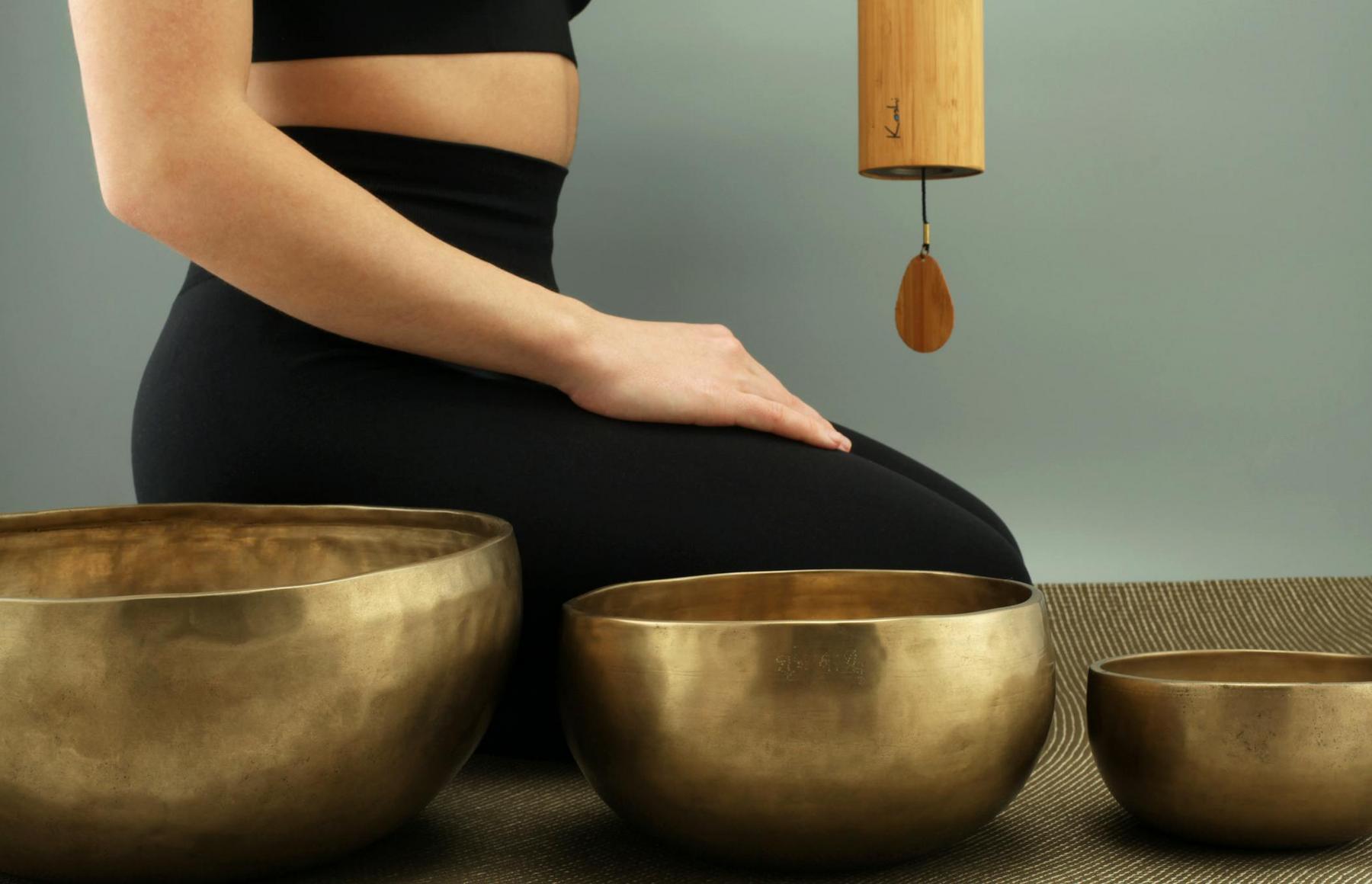
In an era defined by chronic stress, digital overstimulation, and a collective search for stillness, the resonant hum of a Tibetan singing bowl cuts through the noise—quite literally. Across Australia and globally, wellness practitioners, integrative health clinics, and everyday individuals are turning to sound meditation as a scientifically supported pathway to deeper calm, emotional balance, and physiological restoration. Yet despite their growing popularity, the origins, acoustic mechanics, and evidence base of Tibetan singing bowls remain widely misunderstood. This article sets the record straight, drawing on peer-reviewed research to explore what these remarkable instruments are, how they work, and what current science tells us about their place in a holistic wellness practice.
What Are Tibetan Singing Bowls and Where Do They Actually Come From?
The term Tibetan singing bowl is, technically, a misnomer—and understanding this distinction matters for appreciating the true depth of these instruments. Historical records, including accounts from explorer Perceval Landon’s 1903–1904 visit to Tibet, make no mention of singing bowls as meditation or sound healing tools. Scholarly analysis and Gelug monks trained in Tibet have similarly reported no encounter with singing bowls used in meditative practice during their time in the region.
Metallurgical research conducted in collaboration with Oxford University confirms that what are marketed as Tibetan singing bowls are more accurately described as Himalayan singing bowls, originating primarily from Nepal and Northern India. Archaeological evidence places bowl-like instruments in Himalayan regions for a minimum of 600 to 800 years, with some estimates extending beyond 1,000 years. However, their use specifically as sound meditation tools is a far more recent development—largely attributed to the 1972 album Tibetan Bells by American musicians Henry Wolff and Nancy Hennings, which introduced bowl sounds to Western audiences through a New Age soundscape context.
Traditionally manufactured from high-tin bronze (also known as bell metal bronze)—a refined mixture of copper and tin—the distinctive acoustic quality of these bowls arises from this specific metallurgical composition. Despite widespread folklore claiming construction from seven sacred metals associated with celestial bodies, Concordia University’s 1996 metallurgical analysis found only bell metal, with trace quantities of lead, zinc, iron, and silver as impurities. No gold or mercury were detected.

How Do Tibetan Singing Bowls Produce Their Therapeutic Sound Frequencies?
The acoustic properties of Tibetan singing bowls are both complex and scientifically fascinating. When struck or rimmed, these instruments produce a fundamental frequency accompanied by multiple harmonic overtones, each bowl generating a unique sonic fingerprint determined by its size, shape, wall thickness, and material composition.
Singing bowls typically produce frequencies ranging between 110 Hz and 660 Hz, with some instruments reaching the 800–900 Hz range. Research by Kim and Choi (2023), published in the International Journal of Environmental Research and Public Health, studied a bowl with a fundamental frequency of 482.61 Hz (corresponding to musical note B4), which produced a beat frequency of 6.68 Hz—falling precisely within the theta wave band of 4–8 Hz.
This beat frequency arises from a phenomenon known as monaural beating: when two close frequencies produced by the same bowl (or multiple bowls) interact acoustically, they create a rhythmic pulsation perceived by the listener. This pulsating quality—often described as the “singing” sensation—is central to the proposed mechanism of brainwave entrainment, whereby the brain synchronises its own electrical rhythms to match an external periodic stimulus.
| Brainwave Type | Frequency Range | Associated States | Relevance to Sound Meditation |
|---|---|---|---|
| Delta | 0.5–4 Hz | Deep dreamless sleep, deep restoration | Promotes deepest relaxation and restorative states |
| Theta | 4–8 Hz | Light sleep, deep meditation, creativity | Primary target of singing bowl beat frequencies |
| Alpha | 8–12 Hz | Calm alertness, relaxed awareness | Bridge state between waking and meditative consciousness |
| Beta | 13–30 Hz | Normal waking consciousness, active thought | Decreases during sound meditation; linked to stress when excessive |
| Gamma | 30–100 Hz | Heightened perception, complex cognition | Associated with advanced meditative and contemplative states |
What Does Peer-Reviewed Research Reveal About Singing Bowls and Brainwave Entrainment?
The neurological literature on Tibetan singing bowls as sound meditation tools is growing steadily, though researchers consistently acknowledge that the field remains emerging. Current systematic reviews rate the existing body of evidence as low-to-moderate quality, primarily due to small sample sizes and inconsistent protocols across studies—a limitation that honest reporting demands be acknowledged.
That said, several well-designed studies offer compelling findings. The Kim and Choi (2023) EEG study involving 17 participants demonstrated that singing bowl beat frequencies within the theta range produced measurable brainwave synchronisation. Key findings included:
- Delta wave increase of 135.18% from baseline (p = 0.001)
- Theta wave increase of 117.07% from baseline (p = 0.002)
- Up to 251% increase in spectral magnitudes at the bowl’s beat frequency (p = 0.021)
- Alpha and beta waves decreased steadily—consistent with the physiological relaxation response
- The largest brainwave shifts occurred after the final bowl sound, suggesting a progressive and cumulative effect
These findings align with the established neuroscientific principle of the Frequency Following Response (FFR)—the brain’s innate tendency to synchronise its electrical activity with external periodic stimuli. When sound frequencies fall within the theta range (4–8 Hz), the brain demonstrates measurable entrainment toward meditative states, providing a plausible neurological mechanism for the anecdotally reported calming effects of sound meditation.
Landry et al. (2018) further demonstrated that bowl frequency and spatial placement both influence EEG outcomes—a 73 Hz bowl produced gamma-range changes, whilst a 110 Hz bowl affected theta and beta bands—underscoring that not all bowls produce identical neurological effects.
What Are the Documented Physiological and Psychological Effects of Sound Meditation Sessions?
The landmark Goldsby et al. (2017) study, published in the Journal of Evidence-Based Integrative Medicine, remains one of the most comprehensive investigations into singing bowl sound meditation. Involving 62 participants in a 60-minute session where Tibetan singing bowls were used for approximately 95% of the session, the study yielded statistically significant results across all measured variables (p < .001):
- Significant reductions in tension, anger, fatigue, and depressed mood
- Significant reductions in anxiety
- Significant increases in spiritual well-being and sense of faith
Notably, participants who were first-time meditators showed the greatest effect sizes, particularly for tension and physical discomfort reduction—suggesting that sound meditation may be especially valuable for individuals who struggle with traditional silent meditation practice.
Physiologically, the proposed mechanisms are multi-layered. Sound frequencies stimulate the parasympathetic nervous system via vagal nerve pathways, shifting the body from sympathetic (“fight or flight”) activation toward a restorative “rest and digest” state. This shift is associated with reduced heart rate, lowered blood pressure, eased muscular tension, and reduced production of cortisol—the primary physiological stress hormone. Research indicates that 86% of participants showed cortisol reduction following a one-hour sound meditation session.
Walter and Hinterberger’s (2022) 34-participant EEG study corroborated these findings, demonstrating a statistically significant overall decrease in EEG power during sound exposure (d = −0.30, p = .002), alongside reduced heart rate (p < .001).
How Can Tibetan Singing Bowls Be Integrated Into a Holistic Wellness Practice in Australia?
One of the most compelling qualities of Tibetan singing bowls as sound meditation tools is their accessibility. Unlike many contemplative practices requiring years of disciplined training, sound meditation creates meditative states with minimal prior experience. Practitioners of sound healing report that attentive listening to bowl frequencies can facilitate a transition from analytical beta-wave consciousness toward meditative theta states in as little as 30 seconds.
In the Australian context, sound bath sessions are increasingly offered across yoga studios, integrative wellness centres, and holistic health practices in cities including Sydney, Melbourne, Brisbane, and Perth. Sessions typically span 30 to 60 minutes, with participants resting comfortably whilst a practitioner sounds instruments around or, in some modalities, directly upon the body.
Tibetan singing bowls integrate effectively alongside a range of complementary wellness modalities, including:
Mindfulness Meditation
Singing bowls provide an auditory anchor for attention, reducing mental chatter and supporting sustained present-moment awareness without requiring prior meditative experience.
Yoga and Breathwork
Sound frequencies complement asana practice and pranayama, with the acoustic environment supporting deeper parasympathetic engagement and nervous system regulation.
Somatic and Trauma-Informed Approaches
The non-verbal, body-based nature of sound meditation aligns with contemporary trauma-informed care frameworks, supporting nervous system regulation through sensory input rather than cognitive processing.
Stress Management Programmes
Regular practice—even sessions as brief as 10 minutes daily—is associated with meaningful reductions in perceived stress and improvements in emotional well-being over time.
Are There Safety Considerations for Sound Meditation Practitioners?
Sound meditation using Tibetan singing bowls is broadly considered a low-risk complementary wellness practice. However, responsible engagement requires awareness of particular considerations. Individuals with cardiac arrhythmia, epilepsy, or implanted electronic devices are advised to consult their primary care physician prior to participating in sound meditation sessions. Sound therapy is intended as a complementary modality and does not replace evidence-based medical or mental health care.
Individual responses to sound meditation vary. Some participants—particularly those engaging for the first time—may experience temporary emotional release or unfamiliar physical sensations during or following sessions. Such responses are generally transient and are considered part of the body’s adaptive process.
For those maintaining a consistent practice, research suggests that benefits are cumulative: the duration and frequency of sessions correlate with the magnitude of observed outcomes.
The Resonance of Evidence: Ancient Practice Meets Contemporary Wellness Science
Tibetan singing bowls occupy a fascinating intersection of ancient cultural heritage and emerging neuroscience. Whilst the therapeutic application of singing bowls as formalised sound meditation tools is a relatively modern development—rooted in late 20th-century Western wellness culture rather than ancient Tibetan ritual—the acoustic properties of these instruments have demonstrated measurable physiological and psychological effects across multiple peer-reviewed studies.
The evidence, though still maturing, paints a consistent picture: carefully crafted frequencies, when delivered through the complex harmonics of a Himalayan singing bowl, can facilitate brainwave synchronisation, support parasympathetic nervous system activation, reduce emotional tension, and enhance subjective well-being. For Australians seeking accessible, evidence-informed pathways to deeper mindfulness and holistic wellness, Tibetan singing bowls represent a compelling and increasingly well-researched option.
As the field continues to develop—with larger, more rigorously controlled trials underway—sound meditation stands as one of the more intriguing frontiers of integrative wellness practice.
Looking to discuss your health options? Speak to us and see if you’re eligible today.
What is the scientific explanation for how Tibetan singing bowls support meditation?
Tibetan singing bowls produce beat frequencies through the acoustic interaction of multiple harmonics. When these beat frequencies fall within the theta range (4–8 Hz), the brain demonstrates a measurable tendency to synchronise its own electrical rhythms—a process known as the Frequency Following Response or brainwave entrainment. Research by Kim and Choi (2023) recorded a 117.07% increase in theta brainwaves and a 135.18% increase in delta brainwaves following singing bowl exposure, providing neurological evidence for the deepened meditative states reported by practitioners.
Are Tibetan singing bowls genuinely from Tibet?
Scholarly and metallurgical evidence indicates that what are widely marketed as ‘Tibetan singing bowls’ are more accurately described as Himalayan singing bowls, most likely originating from Nepal and Northern India. Their use as sound meditation tools is a predominantly Western development, traced to the early 1970s, rather than an ancient Tibetan practice. Historical Tibetan sources make no mention of bowls used for sound healing or meditation in this manner.
How often should someone engage in singing bowl sound meditation to notice benefits?
Research suggests that even a single 60-minute session can produce statistically significant improvements in mood, tension, and emotional well-being. However, regular, ongoing practice is recommended to maintain outcomes, with sessions as brief as 10 minutes daily demonstrating meaningful effects on perceived stress.
What frequency range do Tibetan singing bowls produce, and why does it matter?
Tibetan singing bowls produce fundamental frequencies broadly between 110 Hz and 660 Hz, with some instruments extending to 800–900 Hz. The therapeutically significant characteristic is the beat frequency—the pulsating interference pattern created by two close harmonic frequencies—which can fall within neurologically meaningful ranges such as theta (4–8 Hz) or delta (0.5–4 Hz).
Can beginners benefit from Tibetan singing bowl sound meditation without prior meditation experience?
Yes, research suggests that beginners may experience significant acute benefits. Bowl-naïve participants have demonstrated greater reductions in tension and physical discomfort compared to experienced meditators. Sound meditation is widely regarded as an accessible entry point into meditative practice, as the sound provides a natural attentional anchor for inducing meditative states.