In an era where digital distractions fragment our attention every few seconds, the sustained practice of mindfulness has become both more challenging and more essential than ever before. Despite sophisticated applications and wearable technology promising to enhance our meditation practice, many individuals discover that the most effective tools for cultivating mental clarity and emotional focus have existed for millennia. Among these ancient instruments, mala beads stand out as tangible bridges between intention and practice—physical anchors that transform the abstract concept of meditation into a measurable, embodied experience.
What Are Mala Beads and Why Do They Matter for Meditation?
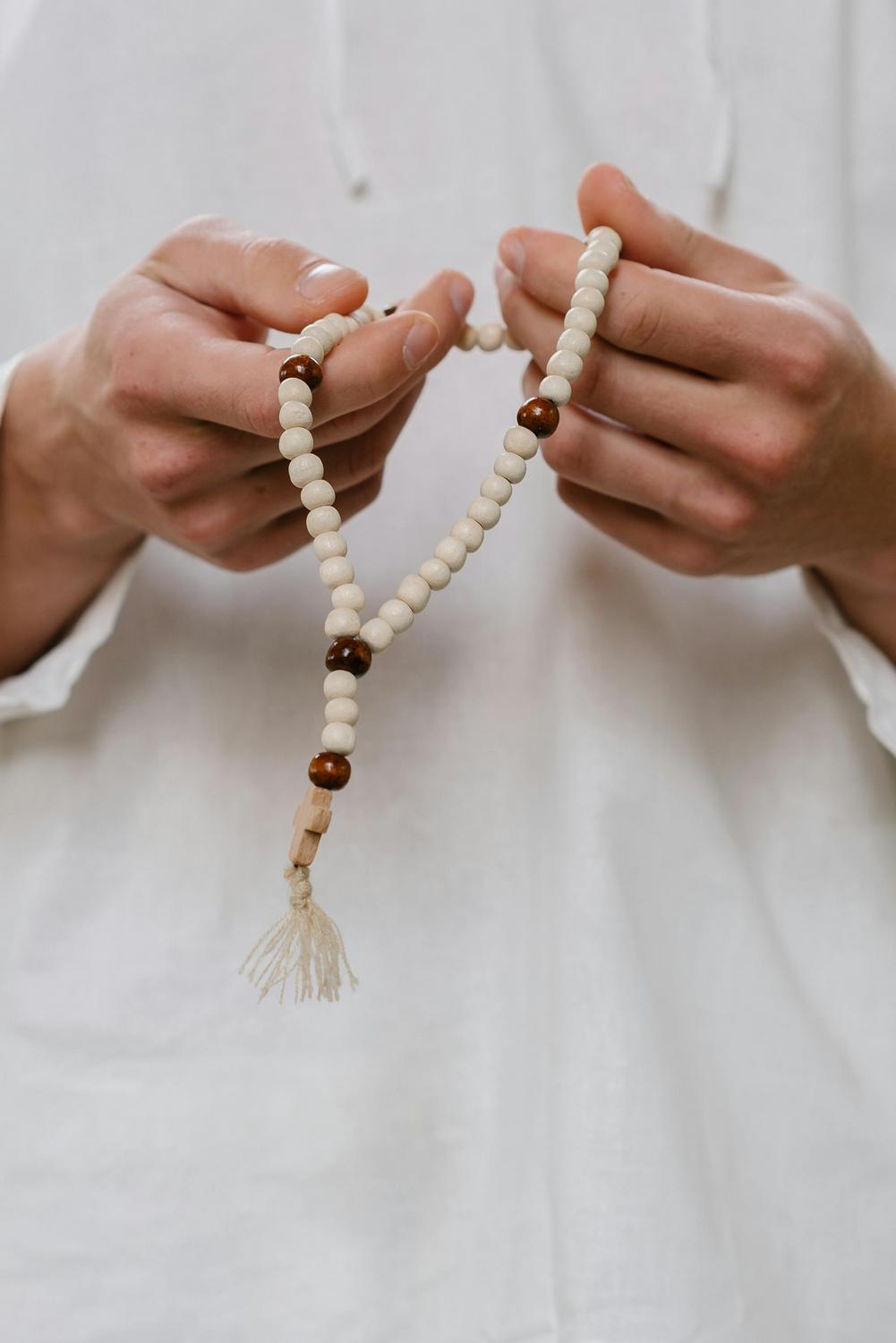
Mala beads, also referred to as japamalas or yoga beads, constitute a string of prayer beads traditionally employed for meditation and spiritual practice across multiple Eastern traditions. The term “mala” derives from Sanskrit, meaning “garland” or “meditation wreath,” reflecting the circular nature of both the physical object and the contemplative practices it supports. A standard mala consists of 108 beads plus one larger “guru bead” (also called the meru, mother, or teacher bead), totalling 109 beads connected with knots between each to prevent sliding and maintain durability.
The significance of these meditation counting tools extends far beyond their physical structure. Mala beads serve multiple functions simultaneously: they provide a kinesthetic anchor for attention, offer a counting mechanism that frees the mind from numerical tracking, and create a ritualistic framework that signals the brain to enter a meditative state. This multisensory engagement proves particularly valuable in our current cultural moment, where sustained attention has become increasingly difficult to maintain.
Historical evidence traces mala beads back to ancient India, with origins estimated between the 8th century BCE and over 3,000 years ago. The earliest clear literary reference appears in the Mu Huanzi Jing, a Mahayana Buddhist text translated into Chinese during the Eastern Jin era (4th-5th century CE). Buddhist legend recounts that King Vaidunya requested Buddha teach a method to support spiritual practice, prompting Buddha to instruct the creation of a 108-bead mala from soapberry seeds. Hindu sadhus originally employed malas to focus their minds during meditation, with references found in Vedic texts and the Rigveda dating back millennia.
The practice spread from India throughout Asia, becoming integral to Buddhist, Hindu, Jain, and Sikh traditions. Interestingly, similar prayer bead traditions exist globally, including Christian rosaries and Islamic prayer beads, suggesting a universal human inclination toward tangible tools for spiritual practice. This cross-cultural convergence underscores a fundamental truth: physical objects that engage our tactile senses can profoundly enhance our ability to sustain mental focus and deepen contemplative states.

Understanding the Sacred Architecture of 108 Beads
The number 108 holds profound significance across multiple spiritual, mathematical, and astronomical frameworks, representing far more than arbitrary selection. In Hindu traditions, 108 represents the number of Upanishads—sacred texts containing mystical teachings that form the philosophical foundation of Vedantic thought. This number also corresponds to the 108 names of various deities and symbolises the 108 energy channels (nadis) that converge at the heart chakra, representing the spiritual centre of love and compassion.
Buddhist philosophy interprets 108 as representing the earthly desires, afflictions, or defilements that practitioners must overcome to achieve enlightenment. This conceptualisation transforms each bead into a symbolic representation of an obstacle transcended, making each complete round of the mala a journey through the full spectrum of human attachment and suffering toward liberation.
The mathematical and astronomical significance of 108 adds another dimension to its sacred status. This number qualifies as a “Harshad number”—from Sanskrit meaning “great joy”—being divisible by the sum of its digits (1+0+8=9). The Sanskrit alphabet contains 54 letters, each possessing both masculine (Shiva) and feminine (Shakti) aspects, yielding 54 × 2 = 108. Remarkably, the Sun’s diameter measures approximately 108 times Earth’s diameter, whilst the distance from Earth to Sun roughly equals 108 times the Sun’s diameter—the same relationship exists between Earth and Moon, explaining why these celestial bodies appear similar in size from our perspective.
Numerologically, the components of 108 carry distinct meanings: 1 represents unity, oneness, and divine consciousness; 0 signifies completeness, emptiness, and the void; 8 symbolises infinity and the eternal cycles of existence. Together, these digits represent spiritual wholeness and our connection to cosmic patterns.
Comparison of Mala Bead Significance Across Traditions
| Tradition | Meaning of 108 Beads | Primary Use | Cultural Context |
|---|---|---|---|
| Hinduism | 108 Upanishads; 108 names of deities; 108 nadis converging at heart chakra | Mantra repetition (japa meditation) focused on specific deities | Ancient Vedic practices; emphasis on devotion (bhakti) and spiritual knowledge |
| Buddhism | 108 earthly desires/afflictions to overcome; 108 Buddha teachings | Mindfulness meditation; recitation of mantras like “Om Mani Padme Hum” | Path to enlightenment; overcoming attachment and suffering |
| Jainism | 108 virtues of ethical conduct including nonviolence and truthfulness | Support for spiritual practice and ethical development | Emphasis on self-discipline, compassion, and liberation |
| Yoga Philosophy | 108 energy channels (nadis) intersecting at heart chakra | Pranayama (breathing) practices and meditation for spiritual alignment | Harmonisation of body, mind, and soul; preparation for higher consciousness |
| Modern Secular Practice | Symbolic of completion and mindful presence | Mindfulness meditation; intention-setting; personal reflection | Contemporary wellness; accessible to diverse spiritual backgrounds |
What Does Research Reveal About Meditation with Mala Beads?
The effectiveness of mala beads as meditation counting tools receives substantial support from research examining meditation practices more broadly. Whilst specific studies on mala beads remain limited, extensive research on meditation techniques—particularly those involving repetitive focus similar to mala practice—demonstrates that these practices support sustained attention and contemplative development.
A comprehensive 2018 analysis by the National Center for Complementary and Integrative Health (NCCIH) examined 142 groups comprising over 12,000 participants, revealing that mindfulness meditation approaches proved an effective contemplative tool for those seeking sustained focus practices. A subsequent 2024 study from the Universities of Southampton and Bath, involving 1,247 adults across 91 countries, demonstrated that regular mindfulness practice supported the development of sustained attention and focused awareness compared to control groups.
The neurological mechanisms underlying meditation practice involve measurable brain engagement. Functional MRI studies reveal that meditation activates emotional and cognitive centres whilst shifting activation patterns in regions associated with self-referential processing. With consistent practice, researchers observe changes in brain structure including increased gray matter in the prefrontal cortex—the area responsible for decision-making and intentional attention—alongside altered patterns in the amygdala, the brain’s emotional processing centre.
Cognitive Function and Attention
Research demonstrates that meditation supports the development of focus and sustained attention, with engagement observable from regular practice. The repetitive counting mechanism inherent in mala bead practice specifically targets this capacity, training the mind to return repeatedly to a single point of focus despite distractions. This mental training carries over into daily life, strengthening the prefrontal cortex’s ability to maintain attention on chosen tasks rather than succumbing to every internal or external distraction.
Studies examining the effects on cognitive function suggest that sustained meditation practice may support the maintenance of mental clarity. The practice engages neuroplasticity—the brain’s capacity to form new neural pathways—potentially offering support for maintaining cognitive vitality. These findings hold particular relevance for Australia’s ageing population seeking contemplative approaches to sustained mental engagement.
Attention Span and Focus Development
The research on attention span reveals compelling evidence: consistent meditation practice improves the ability to sustain focus on chosen activities. The mechanism involves helping practitioners develop the capacity to direct and maintain attention, which carries benefits for task engagement and concentration. The structured nature of mala bead practice—moving through 108 beads whilst maintaining focus—provides a particularly effective framework for developing this attentional capacity.
Which Materials and Properties Should You Consider in Mala Beads?
The materials comprising mala beads carry significance beyond aesthetic considerations, with traditional teachings attributing specific symbolic properties to different substances. Contemporary practitioners may approach these associations metaphorically or literally, depending on their philosophical orientation, though the psychological impact of selecting materials aligned with personal intentions should not be underestimated.
Traditional Sacred Materials
Rudraksha seeds remain among the most widely used traditional materials, particularly in Hindu practices. Associated with Lord Shiva in Hindu mythology, these seeds hold symbolic significance in spiritual traditions. Their naturally textured surface provides excellent tactile feedback during meditation, making them popular amongst both traditionalists and contemporary practitioners.
Bodhi seeds hold particular significance in Buddhist traditions, deriving from the tree under which Siddhartha Gautama attained enlightenment. These seeds symbolically connect practitioners to that moment of awakening, serving as tangible reminders of the potential for transformation inherent in sustained practice.
Sandalwood offers tactile benefits, with its smooth texture pleasant to handle during meditation. Its fine craftsmanship makes it comfortable for extended practice sessions.
Tulsi (holy basil) wood features prominently in Vaishnava traditions, considered sacred to Lord Krishna and Vishnu devotees. Its light weight and smooth texture make it comfortable for extended practice sessions.
Gemstone Properties and Selection
Modern practitioners frequently select gemstone malas based on their aesthetic preferences or symbolic associations with their intended meditation focus. Whilst scientific evidence for the metaphysical properties of gemstones remains limited, the psychological impact of intention-setting through material selection provides genuine value.
Rose quartz, with its gentle pink hue, traditionally associates with compassion and heart-centred contemplative practices. Practitioners focused on developing loving-kindness or compassion meditation may find this material aesthetically supportive.
Amethyst, a purple crystal, connects with clarity and mental focus in traditional symbolism. Its association with spiritual development makes it popular for meditation practices emphasising insight and wisdom cultivation.
Black onyx provides visual grounding through its deep colour, particularly appealing for practitioners who appreciate its weight and tactile qualities during meditation.
Lava stone presents unique properties: its porous texture creates an interesting tactile experience during meditation, offering substantial sensory feedback through its rough surface.
The selection of materials ultimately matters less than the sincerity and intentionality brought to practice. No two malas appear identical due to natural variations in materials, making each set unique to its practitioner. The process of selecting a mala becomes part of the contemplative journey itself, requiring attention to personal resonance rather than external validation.
How Do You Use Mala Beads in Meditation Practice?
The proper technique for using mala beads as meditation counting tools follows a structured approach that has evolved over millennia, though contemporary practitioners may adapt these guidelines to suit individual needs and preferences.
Preparation and Positioning
Begin by finding a quiet space free from interruptions. Sit in a position supporting both comfort and alertness—traditionally cross-legged on a cushion with an erect spine, though sitting in a chair with feet flat on the floor proves equally valid. The priority involves maintaining a posture that allows sustained attention without physical discomfort becoming a distraction.
Hold the mala in your right hand (though left hand remains acceptable if more natural to you), draping it over the middle or ring finger. Traditional teachings often suggest avoiding the index finger, which symbolically represents ego and judgment in some traditions. Use your thumb to draw each bead toward you, working in conjunction with the middle or ring finger to maintain grip.
The Practice Sequence
Start with the bead immediately adjacent to the guru bead—the larger, distinctive bead that marks the beginning and ending point. The guru bead itself is never counted or crossed during practice, out of respect for what it represents: the teacher, the divine, or the practitioner’s highest self.
With each bead, repeat your chosen mantra, affirmation, prayer, or complete one full breath cycle (inhale and exhale). The mantra might be a traditional Sanskrit phrase such as “Om Namah Shivaya” or “Om Mani Padme Hum,” or a personal affirmation like “I am peaceful” or “I release what no longer serves me.” The repetition can occur aloud, whispered, or in silent mental recitation, with each approach offering distinct benefits.
Draw each bead toward you—a movement symbolising drawing in the qualities or states you’re cultivating—whilst maintaining focus on the mantra and the physical sensation of the bead beneath your fingers. When thoughts arise, gently acknowledge their presence without judgment and return attention to the mantra and the tactile sensation of the current bead.
Completing and Continuing Rounds
Upon returning to the guru bead after moving through all 108 beads, you’ve completed one full round or cycle. Some traditions count this as 100 repetitions rather than 108, allowing margin for beads accidentally skipped or imperfect recitation. If continuing beyond one round, reverse direction rather than crossing the guru bead, repositioning the mala and continuing in the opposite direction.
More advanced practitioners may undertake multiple rounds—sometimes completing several full malas during a single session or maintaining a 40-day practice using the same mantra daily. This extended practice is said to deepen familiarity with the mantra and meditation focus.
Alternative Approaches
Beyond traditional mantra repetition, mala beads support various meditation styles. Breath meditation uses each bead to mark one complete breathing cycle, helping develop rhythmic awareness. Gratitude contemplation challenges practitioners to identify something different to appreciate with each bead, cultivating the habit of noticing positive aspects of life. Loving-kindness meditation dedicates different rounds to extending compassion toward oneself, loved ones, acquaintances, difficult people, and ultimately all beings.
How Can You Integrate Mala Beads into Your Wellness Routine?
The incorporation of mala beads as meditation counting tools into contemporary wellness practices requires neither religious affiliation nor extensive meditation experience. These versatile instruments adapt readily to secular mindfulness practices, serving as tangible reminders of intention and commitment to contemplative practice throughout daily life.
Daily Practice Integration
Consistency proves more valuable than duration in meditation practice. Many practitioners find morning sessions particularly effective, using mala beads to establish a contemplative foundation before engaging with the day’s demands. Others prefer evening practice, employing the beads to reflect on the day’s experiences and transition toward rest.
The portability of mala beads—particularly wrist mala versions containing 18, 21, or 27 beads—allows practice integration during brief moments throughout the day. A few conscious breaths whilst holding the beads during a work break, before an important conversation, or whilst commuting can help recenter attention.
Complementary Wellness Practices
Mala beads integrate seamlessly with various holistic wellness approaches. Practitioners of yoga often use malas to set intentions before practice or during the meditative closing sequences. The beads pair effectively with breathwork techniques, providing a counting mechanism that allows full attention on breathing patterns without mental tracking.
Accessibility Across Populations
The tactile nature of mala beads proves particularly beneficial for individuals who struggle with purely mental meditation techniques. People who appreciate concrete structure often find the physical engagement helps anchor attention more effectively than abstract focus points. The structured nature of moving through 108 beads provides both framework and measurable progress, offering reassurance to those new to meditation practice.
Respecting Cultural Origins Whilst Embracing Accessibility
Contemporary practitioners benefit from understanding the rich cultural and spiritual heritage of mala beads whilst recognising that these tools have evolved across multiple traditions for millennia. The practice doesn’t require adoption of specific religious beliefs, though approaching these meditation counting tools with respect for their origins enhances rather than diminishes their meaningfulness.
Caring for Your Meditation Practice and Tools
The maintenance of mala beads involves both practical preservation and intentional engagement. Store your mala in a dedicated cloth bag or box when not in use, protecting it from physical damage whilst maintaining a respectful space. Traditional teachings suggest placing malas on meditation spaces rather than leaving them on floors or casual surfaces, reflecting the principle that these tools merit the same respect as the practice they support.
Periodic energetic renewal helps maintain meaningful connection to the mala. Place beads in quiet spaces, or simply hold the mala in both hands whilst setting clear intention before practice. Through regular, sincere use, the mala becomes increasingly significant as a focal point for meditation.
Well-constructed malas featuring knots between each bead demonstrate greater longevity than those with beads strung continuously. The knots prevent abrasion and sliding, maintaining the integrity of both string and beads through extended use. Avoid wrapping full malas repeatedly around your wrist, as this creates tension potentially reducing the tool’s lifespan.
Bringing Ancient Wisdom Forward
The persistence of mala beads across three millennia of human civilisation speaks to their fundamental effectiveness as meditation counting tools and contemplative anchors. In our current moment—characterised by unprecedented digital connectivity yet profound disconnection from present-moment awareness—these ancient instruments offer a bridge between timeless wisdom and contemporary understanding of attention and focus.
Research continues validating what contemplative traditions have maintained for millennia: that sustained, focused attention cultivated through practices like mala meditation produces measurable engagement of mental capacities and supports the development of contemplative skills. The tactile, repetitive nature of working with mala beads addresses the modern challenge of scattered attention through elegantly simple means—108 opportunities per round to return to the present moment, to notice when the mind wanders, and to gently guide attention back to chosen focus.
The value of mala beads extends beyond the formal meditation session. These tools serve as tangible reminders of intention, commitment to contemplative practice, and the possibility of finding stillness amidst chaos. Worn as jewellery or kept in pockets throughout the day, they function as touchstones connecting us back to the meditative state cultivated during practice, supporting the integration of mindful awareness into daily activities.
For those exploring contemplative approaches to wellbeing, mala beads represent an accessible, time-tested tool requiring no special equipment, subscription services, or technical expertise. Whether approached from spiritual, secular, or simply curious perspectives, these meditation counting tools offer a pathway toward the sustained focus and mental clarity that constitute valuable components of comprehensive personal wellbeing.