
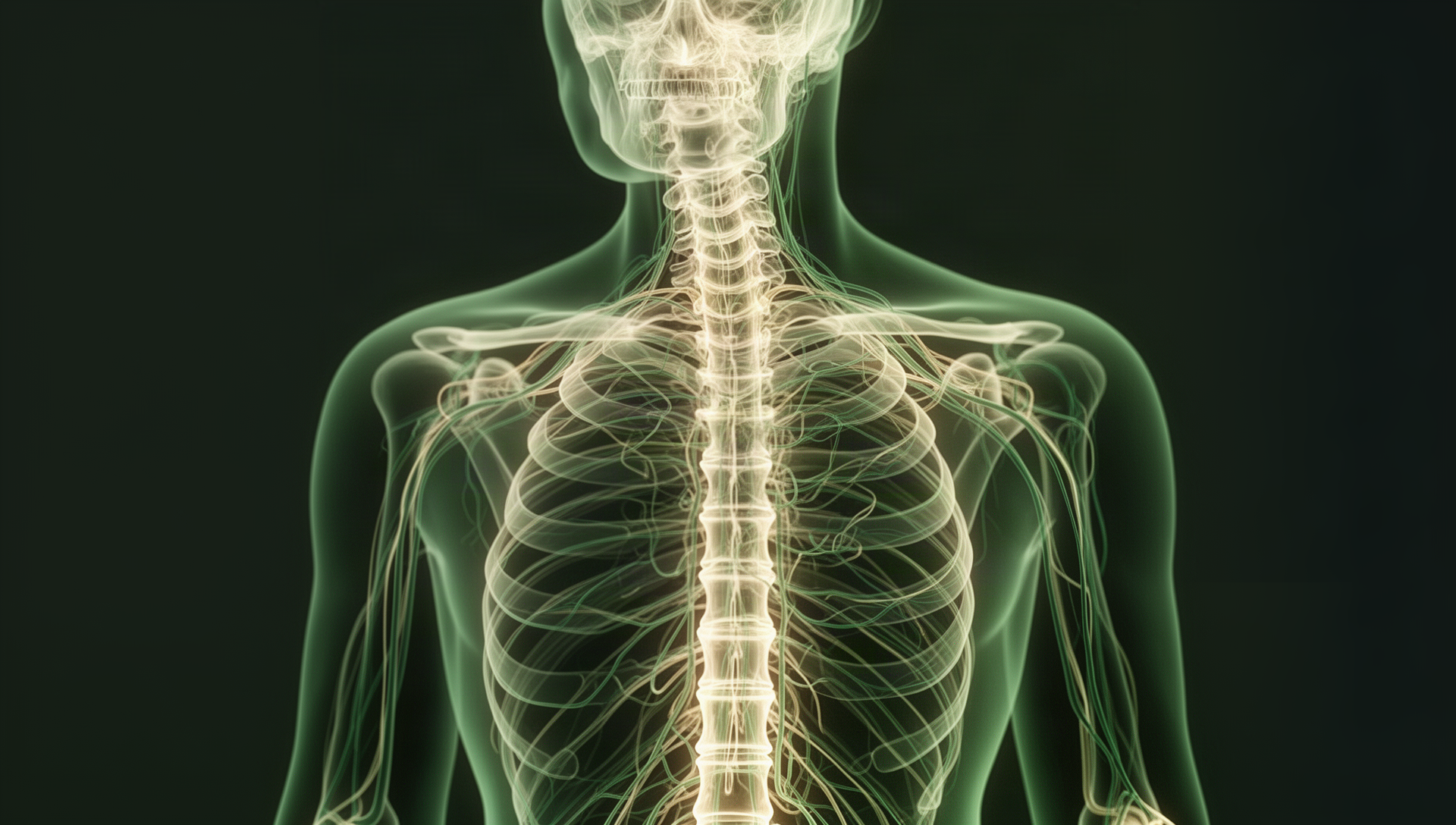
Pain is meant to be a messenger. A sharp signal that says: something is wrong, pay attention, be careful. For most injuries, that message fades as the tissue heals. But for millions of people living with chronic pain, the message never stops arriving — even long after the original injury has healed, or in some cases, without any clear injury at all. Understanding why requires looking not at the site of the pain, but at the nervous system itself.
Acute Pain vs. Chronic Pain: Two Different Systems
Acute pain is a straightforward alarm system. Touch something hot, and nerve endings called nociceptors fire a signal up the spinal cord to the brain, which interprets it as pain and triggers a protective response — you pull your hand away. Once the tissue heals, the alarm switches off.
Chronic pain, generally defined as pain lasting longer than three months, often works differently. In many cases, the nervous system itself changes shape and behaviour, a process researchers call central sensitisation. The spinal cord and brain become more efficient at transmitting and amplifying pain signals, sometimes to the point where normally painless sensations — light touch, mild pressure, even temperature change — are processed as painful. The alarm system, in effect, becomes stuck in the “on” position.
Why the Nervous System Rewires Itself
Central sensitisation isn’t a flaw so much as an overcorrection. When pain signals fire repeatedly and intensely, whether from an injury, chronic inflammation, or nerve damage, the neurons involved in transmitting those signals can become more excitable over time — a phenomenon sometimes called “wind-up.” Brain imaging studies have shown that people with chronic pain conditions often have measurable differences in the regions of the brain responsible for processing pain, attention, and emotional regulation, since these systems are closely intertwined.
This is part of why chronic pain so often travels with sleep disruption, low mood, and difficulty concentrating — the same neural circuitry that processes pain also touches these other systems. It also explains why chronic pain can persist even after scans show an injury has fully healed. The pain has, in a sense, outlived its original cause.
The Role of Pacing and the Body’s Stress Response
One of the more counterintuitive findings in chronic pain research is that pushing through pain, or alternatively avoiding all activity out of fear of pain, can both make sensitisation worse over time. Pain specialists often recommend a middle path called pacing: breaking activity into manageable amounts, with planned rest, rather than swinging between overexertion and total inactivity.
Chronic pain also keeps the body’s stress response, governed largely by the hypothalamic-pituitary-adrenal (HPA) axis, in a more activated state. Elevated stress hormones can, in turn, lower the threshold at which the nervous system perceives pain — creating a feedback loop where pain increases stress, and stress increases the perception of pain.
Living With a Sensitised Nervous System
None of this means chronic pain is “in someone’s head” in the dismissive sense that phrase is sometimes used. The changes are physical and measurable, occurring in real neural tissue. What it does mean is that effective management usually looks broader than treating the original site of injury alone — it often involves sleep, stress regulation, gradual movement, and a personalised care plan built around an individual’s specific pattern of pain, rather than a single fix.
If chronic pain has been shaping your week for a while, it’s worth having a full, unhurried conversation with a practitioner about your history and goals, rather than trying to manage it in isolation.
You can read more about how our practitioners approach chronic pain consultations on our Chronic Pain Telehealth WA page.
Frequently Asked Questions
Is chronic pain the same as an old injury that just hasn’t healed?
Not necessarily. Chronic pain often involves changes in how the nervous system processes signals, which can persist even after the original tissue has fully healed. This is why chronic pain can sometimes continue without any ongoing structural damage.
Why does chronic pain so often affect sleep and mood as well?
The brain regions involved in processing pain overlap significantly with those involved in regulating sleep, attention, and emotion. When the nervous system is in a heightened, sensitised state, these connected systems are often affected too.
Does resting completely help chronic pain?
Not usually on its own. Many pain specialists recommend pacing — a balance of manageable activity and planned rest — rather than complete rest, since prolonged inactivity can contribute to further sensitisation over time.